Some shopping links may earn us a commission at no extra cost to you. Our recommendations remain independent.

Independent thermal-camera research

See the problems your eyes can’t.

Choose the right thermal camera for heat loss, HVAC, electrical checks and electronics—without confusing enhanced resolution with the sensor you actually buy.

+74.8°F
LIVE DECISION LENSNative pixels first.Marketing enhancement second.

Camera finder

Start with the job, not the badge.

Two choices narrow the full camera catalogue immediately.

25

verified matches
shown below

Camera catalogue · updated August 2026

Thermal cameras worth comparing

Specifications checked against manufacturer material and the exact US Amazon listing linked on each card. These are evidence-based editorial reviews, not claims of hands-on laboratory testing. Prices and marketplace ratings are excluded because they change.

Phone & tablet thermal cameras

USB-C, Lightning and wireless modules for portable inspections.

Strong Android + PC dual-lens pickTOPDON TC001 Plus thermal camera product reference
Phone module · TOPDON

TOPDON TC001 Plus

Our take: A dual-lens module combining thermal and visible detail, with strong native resolution and PC support.

Native IR
256×192 native / 512×384 enhanced
Refresh
25 Hz
Best for
Android + PC analysis
Read full review

Review basis: manufacturer documentation, model-specific listing details and a specification-led comparison with the other cameras in this catalogue.

What stands out

The TOPDON TC001 Plus combines 256×192 native / 512×384 enhanced with a 25 Hz refresh rate and <40 mK thermal sensitivity. That combination is most useful for android + pc analysis.

What it is like to use

In everyday use, the appeal is speed: connect it, open the app and save an image straight to the device you already carry. The trade-off is that the phone, connector and app become part of the tool, so compatibility matters just as much as the detector.

Where it fits best

Its stated measuring range is -4°F to 1022°F, while the format is phone module. A dual-lens module combining thermal and visible detail, with strong native resolution and PC support.

Drawbacks to consider

Not for iOS; the linked US listing showed limited availability during our August 2026 audit.

Our verdict

I would shortlist the TOPDON TC001 Plus for android + pc analysis when portability matters more than having a separate handheld instrument.

Who should skip it: Anyone whose priority is contradicted by the limitation below, or whose device, reporting workflow or working distance is not explicitly supported.

View full specifications
Detector / output
256×192 native / 512×384 enhanced
Refresh rate
25 Hz
Temperature range
-4°F to 1022°F
Thermal sensitivity
<40 mK
Accuracy
±3.6°F (±2°C) or ±2%
Field of view
56° × 42°
Focus
Fixed focus
Dimensions
2.8 × 1.65 × 0.55 in (71 × 42 × 14 mm)
Weight
About 1 oz (manufacturer-listed)
Power / battery
Draws power from phone; no battery
Storage / connection
Photos/video saved to phone or PC
Durability
Carry case; no published IP rating
Compatibility
Android USB-C / Windows

What I’d watch for: Not for iOS; the linked US listing showed limited availability during our August 2026 audit.

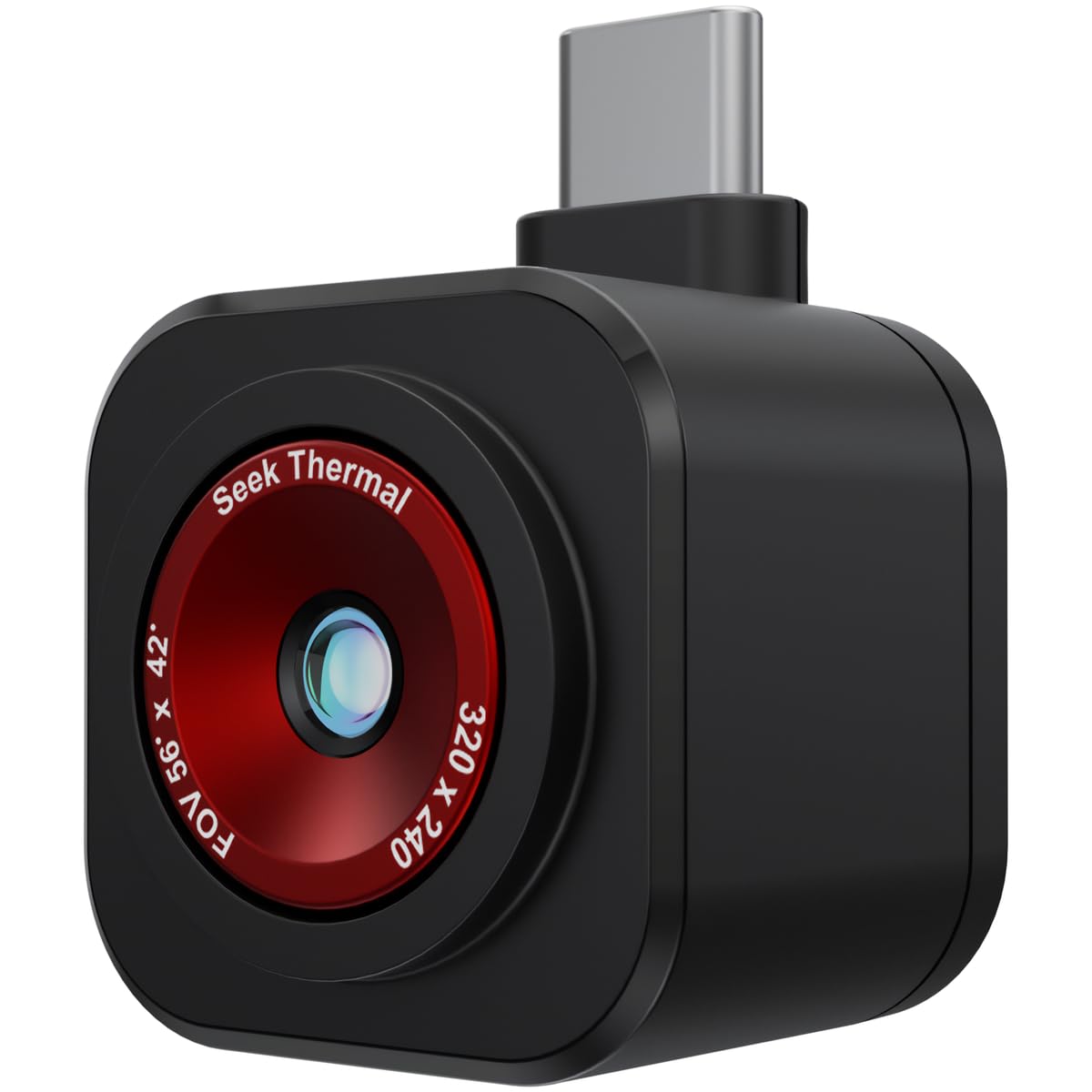
Best phone-module detailSeek Thermal Nano 300 (iOS USB-C) thermal camera product reference

Phone module · SEEK

Seek Thermal Nano 300 (iOS USB-C)

Our take: High native resolution, a wide field of view and no separate battery make it strong for buildings and electronics.

Native IR
320×240 native
Refresh
25 Hz
Best for
High-resolution phone scans
Read full review

Review basis: manufacturer documentation, model-specific listing details and a specification-led comparison with the other cameras in this catalogue.

What stands out

The Seek Thermal Nano 300 (iOS USB-C) combines 320×240 native with a 25 Hz refresh rate and <35 mK thermal sensitivity. That combination is most useful for high-resolution phone scans.

What it is like to use

In everyday use, the appeal is speed: connect it, open the app and save an image straight to the device you already carry. The trade-off is that the phone, connector and app become part of the tool, so compatibility matters just as much as the detector.

Where it fits best

Its stated measuring range is -4°F to 626°F, while the format is phone module. High native resolution, a wide field of view and no separate battery make it strong for buildings and electronics.

Drawbacks to consider

The linked listing is the Apple USB-C version; it is not an Android model.

Our verdict

I would shortlist the Seek Thermal Nano 300 (iOS USB-C) for high-resolution phone scans when portability matters more than having a separate handheld instrument.

Who should skip it: Anyone whose priority is contradicted by the limitation below, or whose device, reporting workflow or working distance is not explicitly supported.

View full specifications
Detector / output
320×240 native
Refresh rate
25 Hz
Temperature range
-4°F to 626°F
Thermal sensitivity
<35 mK
Accuracy
±9°F (±5°C) or ±5%
Field of view
56° × 42°
Focus
Fixed focus
Dimensions
Pocket module; approximately 1.2 in square
Weight
Under 1 oz
Power / battery
Draws power from phone
Storage / connection
Saved through Seek Nano app
Durability
Connector-specific; use supplied case
Compatibility
Apple iOS USB-C; iPhone 15/16 listing

What I’d watch for: The linked listing is the Apple USB-C version; it is not an Android model.

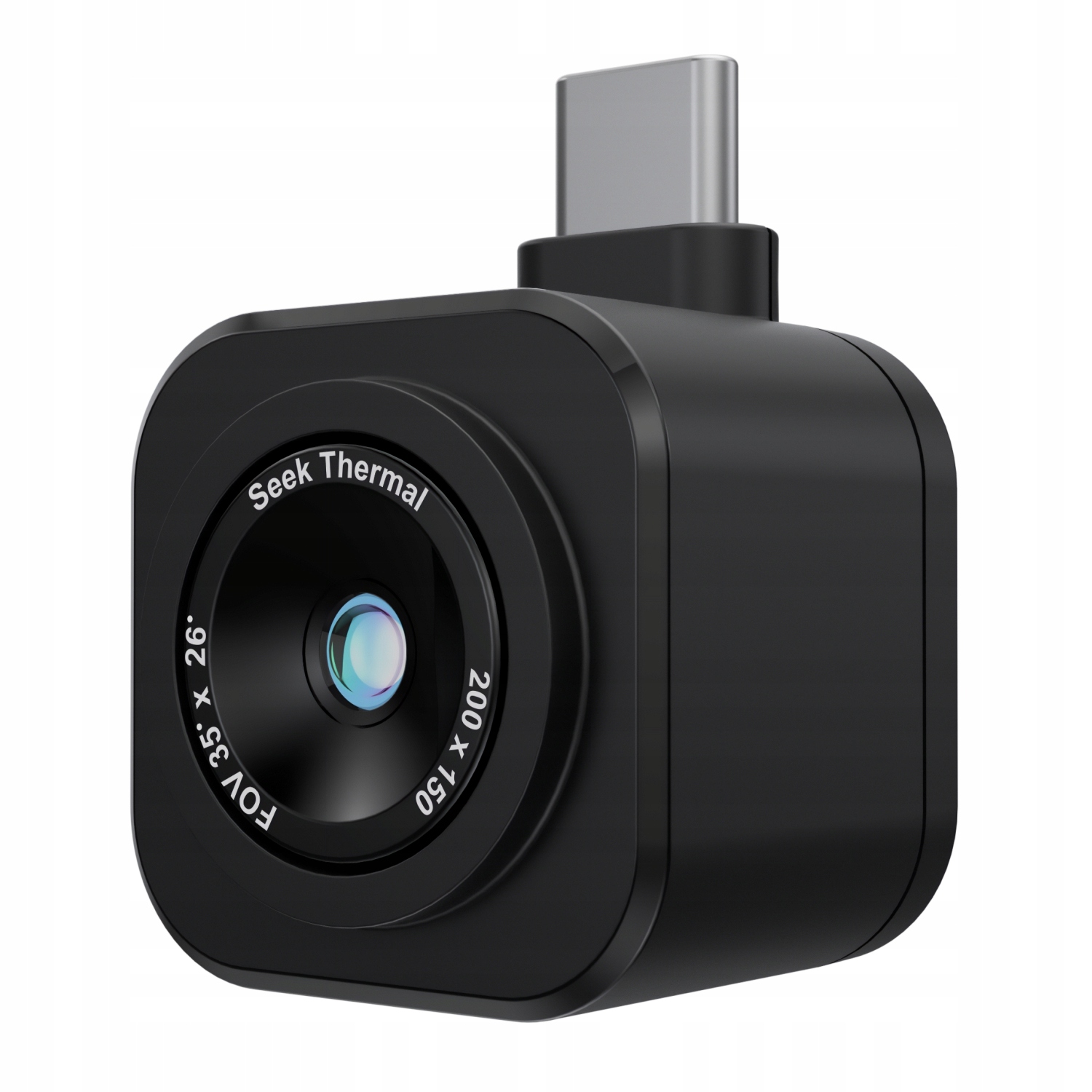
Best compact starterSeek Thermal Nano 200 (iOS USB-C) thermal camera product reference

Phone module · SEEK

Seek Thermal Nano 200 (iOS USB-C)

Our take: A pocketable entry point for straightforward phone-based home and travel scans.

Native IR
200×150 native
Refresh
25 Hz
Best for
Home checks and travel
Read full review

Review basis: manufacturer documentation, model-specific listing details and a specification-led comparison with the other cameras in this catalogue.

What stands out

The Seek Thermal Nano 200 (iOS USB-C) combines 200×150 native with a 25 Hz refresh rate and <35 mK thermal sensitivity. That combination is most useful for home checks and travel.

What it is like to use

In everyday use, the appeal is speed: connect it, open the app and save an image straight to the device you already carry. The trade-off is that the phone, connector and app become part of the tool, so compatibility matters just as much as the detector.

Where it fits best

Its stated measuring range is -4°F to 626°F, while the format is phone module. A pocketable entry point for straightforward phone-based home and travel scans.

Drawbacks to consider

The linked listing is for Apple iOS USB-C; lower native resolution limits small or distant targets.

Our verdict

I would shortlist the Seek Thermal Nano 200 (iOS USB-C) for home checks and travel when portability matters more than having a separate handheld instrument.

Who should skip it: Anyone whose priority is contradicted by the limitation below, or whose device, reporting workflow or working distance is not explicitly supported.

View full specifications
Detector / output
200×150 native
Refresh rate
25 Hz
Temperature range
-4°F to 626°F
Thermal sensitivity
<35 mK
Accuracy
±9°F (±5°C) or ±5%
Field of view
35° × 26°
Focus
Fixed, about 12 in (30 cm) to infinity
Dimensions
Pocket module; approximately 1.2 in square
Weight
Under 1 oz
Power / battery
Draws power from phone
Storage / connection
Saved through Seek Nano app
Durability
Connector-specific; use supplied case
Compatibility
Apple iOS USB-C; iPhone 15/16 listing

What I’d watch for: The linked listing is for Apple iOS USB-C; lower native resolution limits small or distant targets.

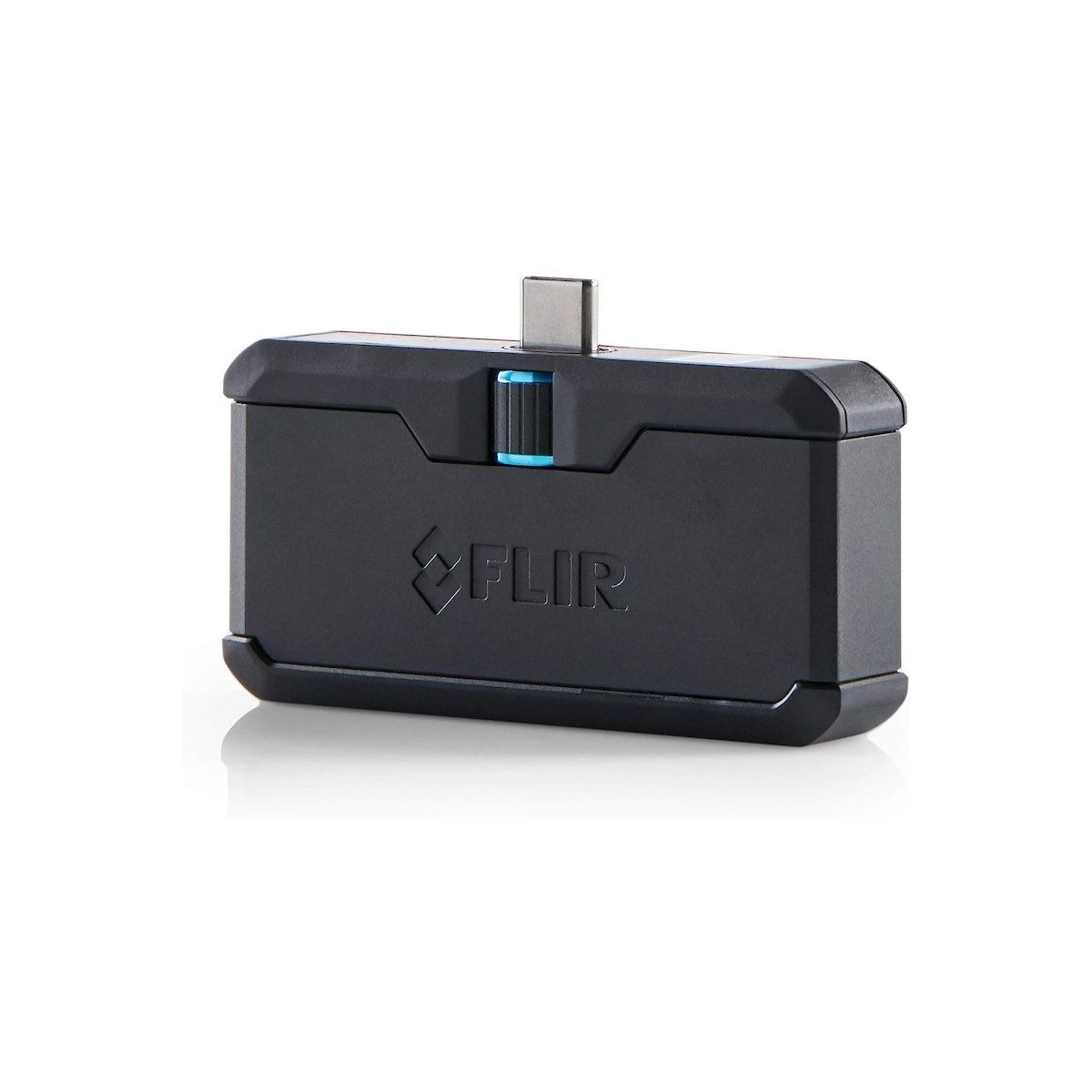
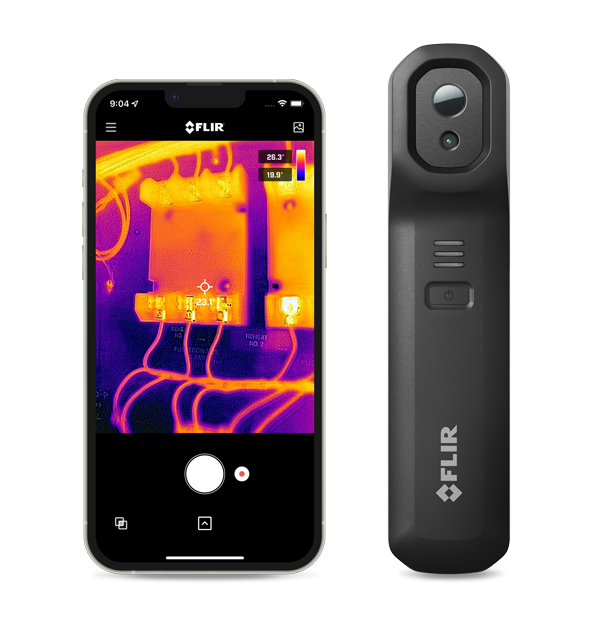
Best established phone workflowFLIR ONE Pro thermal camera product reference

Phone module · FLIR

FLIR ONE Pro

Our take: FLIR’s established phone accessory combines radiometric capture with MSX visible-edge enhancement.

Native IR
160×120 native / 480×360 enhanced
Refresh
8.7 Hz
Best for
Home and trade phone inspections
Read full review

Review basis: manufacturer documentation, model-specific listing details and a specification-led comparison with the other cameras in this catalogue.

What stands out

The FLIR ONE Pro combines 160×120 native / 480×360 enhanced with a 8.7 Hz refresh rate and 70 mK thermal sensitivity. That combination is most useful for home and trade phone inspections.

What it is like to use

In everyday use, the appeal is speed: connect it, open the app and save an image straight to the device you already carry. The trade-off is that the phone, connector and app become part of the tool, so compatibility matters just as much as the detector.

Where it fits best

Its stated measuring range is -4°F to 752°F, while the format is phone module. FLIR’s established phone accessory combines radiometric capture with MSX visible-edge enhancement.

Drawbacks to consider

Lower refresh rate and native resolution than newer 25 Hz phone modules.

Our verdict

I would shortlist the FLIR ONE Pro for home and trade phone inspections when portability matters more than having a separate handheld instrument.

Who should skip it: Anyone whose priority is contradicted by the limitation below, or whose device, reporting workflow or working distance is not explicitly supported.

View full specifications
Detector / output
160×120 native / 480×360 enhanced
Refresh rate
8.7 Hz
Temperature range
-4°F to 752°F
Thermal sensitivity
70 mK
Accuracy
±5.4°F (±3°C) or ±5%
Field of view
55° × 43°
Focus
Fixed, minimum about 6 in (15 cm)
Dimensions
2.7 × 1.3 × 0.6 in (68 × 34 × 14 mm)
Weight
1.3 oz (36.5 g)
Power / battery
Internal battery; roughly 1 hour
Storage / connection
Saved to phone / FLIR app
Durability
Drop tested to 1.8 m
Compatibility
Connector-specific iOS / Android

What I’d watch for: Lower refresh rate and native resolution than newer 25 Hz phone modules.

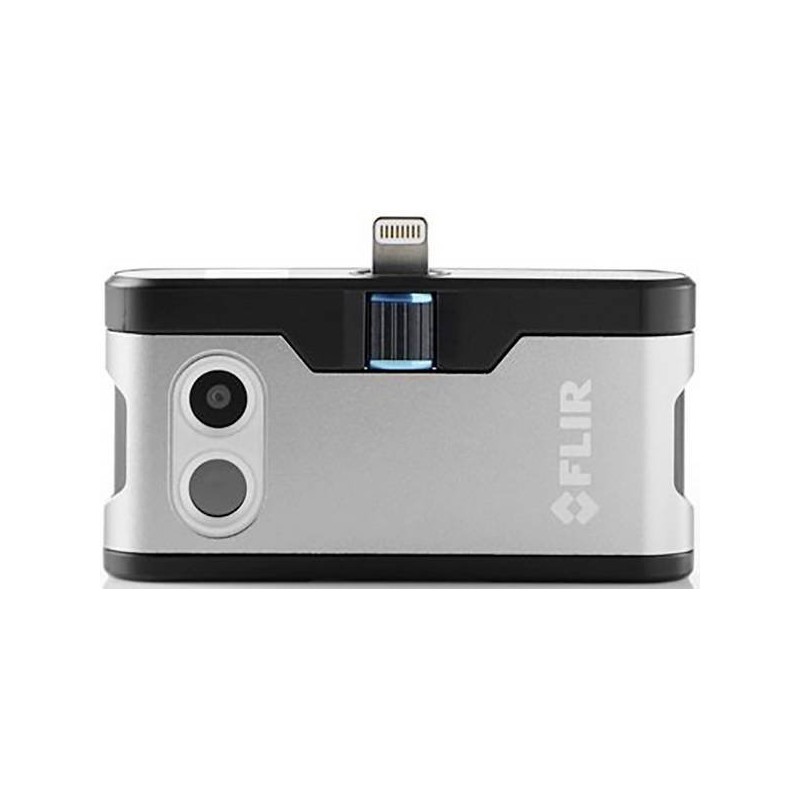
Best simple iPhone optionFLIR ONE Gen 3 thermal camera product reference

Phone module · FLIR

FLIR ONE Gen 3

Our take: A simple branded iPhone option for obvious drafts, hot spots and household temperature patterns.

Native IR
80×60 native / 1440×1080 MSX image
Refresh
8.7 Hz
Best for
Basic household checks
Read full review

Review basis: manufacturer documentation, model-specific listing details and a specification-led comparison with the other cameras in this catalogue.

What stands out

The FLIR ONE Gen 3 combines 80×60 native / 1440×1080 msx image with a 8.7 Hz refresh rate and 150 mK thermal sensitivity. That combination is most useful for basic household checks.

What it is like to use

In everyday use, the appeal is speed: connect it, open the app and save an image straight to the device you already carry. The trade-off is that the phone, connector and app become part of the tool, so compatibility matters just as much as the detector.

Where it fits best

Its stated measuring range is -4°F to 248°F, while the format is phone module. A simple branded iPhone option for obvious drafts, hot spots and household temperature patterns.

Drawbacks to consider

Low native resolution and Lightning compatibility make it unsuitable for many newer phones.

Our verdict

I would shortlist the FLIR ONE Gen 3 for basic household checks when portability matters more than having a separate handheld instrument.

Who should skip it: Anyone whose priority is contradicted by the limitation below, or whose device, reporting workflow or working distance is not explicitly supported.

View full specifications
Detector / output
80×60 native / 1440×1080 MSX image
Refresh rate
8.7 Hz
Temperature range
-4°F to 248°F
Thermal sensitivity
150 mK
Accuracy
±5.4°F (±3°C) or ±5%
Field of view
50° × 38°
Focus
Fixed, minimum about 6 in (15 cm)
Dimensions
2.6 × 1.3 × 0.6 in (67 × 34 × 14 mm)
Weight
1.2 oz (34.5 g)
Power / battery
Internal battery; roughly 1 hour
Storage / connection
Saved to iPhone through FLIR app
Durability
Compact consumer housing
Compatibility
iOS Lightning model

What I’d watch for: Low native resolution and Lightning compatibility make it unsuitable for many newer phones.

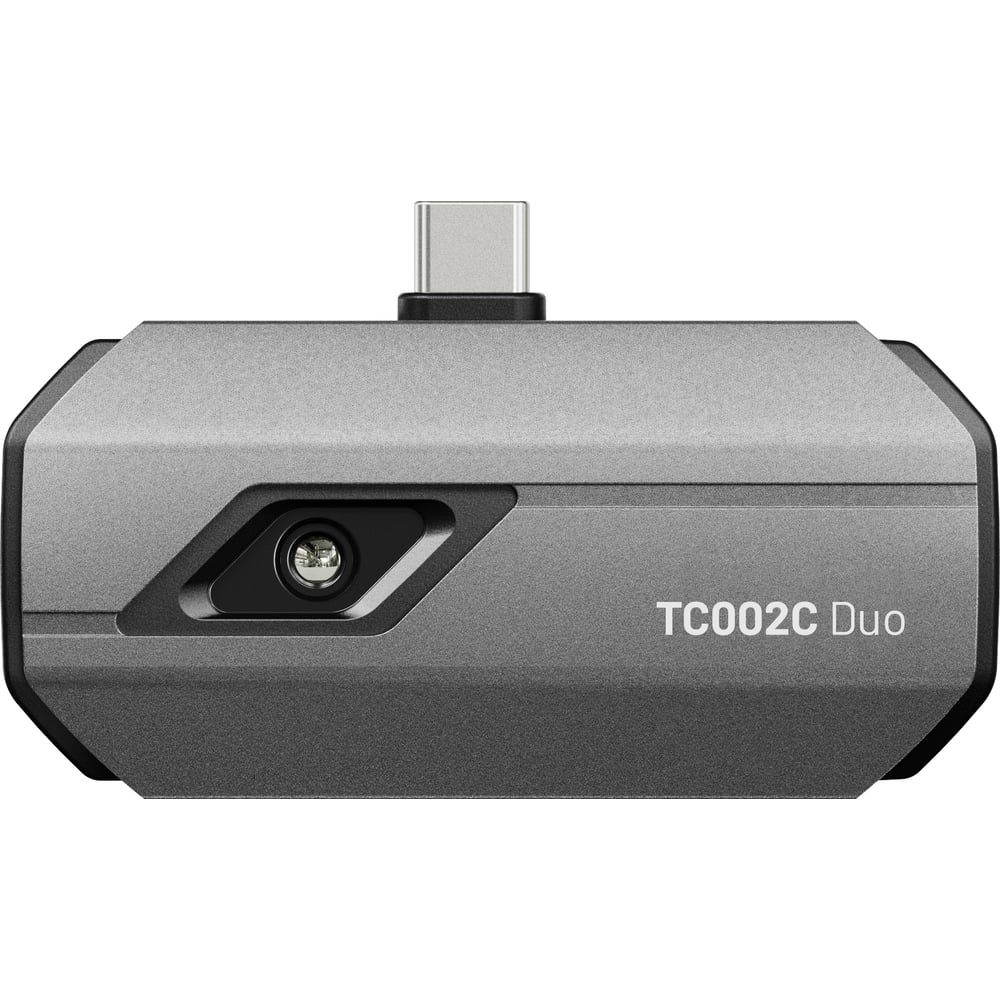
Best cross-device moduleTOPDON TC002C Duo thermal camera product reference

Phone/tablet module · TOPDON

TOPDON TC002C Duo

Our take: This is the TOPDON I would shortlist when several people need to share one camera across newer USB-C phones, tablets and a Windows laptop.

Native IR
256×192 native / 512×384 enhanced
Refresh
25 Hz
Best for
USB-C phones, tablets and Windows
Read full review

Review basis: manufacturer documentation, model-specific listing details and a specification-led comparison with the other cameras in this catalogue.

What stands out

The TOPDON TC002C Duo combines 256×192 native / 512×384 enhanced with a 25 Hz refresh rate and <40 mK thermal sensitivity. That combination is most useful for usb-c phones, tablets and windows.

What it is like to use

In everyday use, the appeal is speed: connect it, open the app and save an image straight to the device you already carry. The trade-off is that the phone, connector and app become part of the tool, so compatibility matters just as much as the detector.

Where it fits best

Its stated measuring range is -4°F to 1022°F, while the format is phone/tablet module. This is the TOPDON I would shortlist when several people need to share one camera across newer USB-C phones, tablets and a Windows laptop.

Drawbacks to consider

Check TOPDON’s current device list before buying; USB-C alone does not guarantee that every phone supports the app.

Our verdict

I would shortlist the TOPDON TC002C Duo for usb-c phones, tablets and windows when portability matters more than having a separate handheld instrument.

Who should skip it: Anyone whose priority is contradicted by the limitation below, or whose device, reporting workflow or working distance is not explicitly supported.

View full specifications
Detector / output
256×192 native / 512×384 enhanced
Refresh rate
25 Hz
Temperature range
-4°F to 1022°F
Thermal sensitivity
<40 mK
Accuracy
±3.6°F (±2°C) or ±2%
Field of view
56° × 42°
Focus
Fixed focus
Dimensions
2.8 × 1.7 × 0.6 in (approx. module)
Weight
About 1.6 oz
Power / battery
Draws power from USB-C device
Storage / connection
Saved to phone/tablet or PC
Durability
Carry case; no published IP rating
Compatibility
USB-C iOS, iPadOS, Android and Windows

What I’d watch for: Check TOPDON’s current device list before buying; USB-C alone does not guarantee that every phone supports the app.

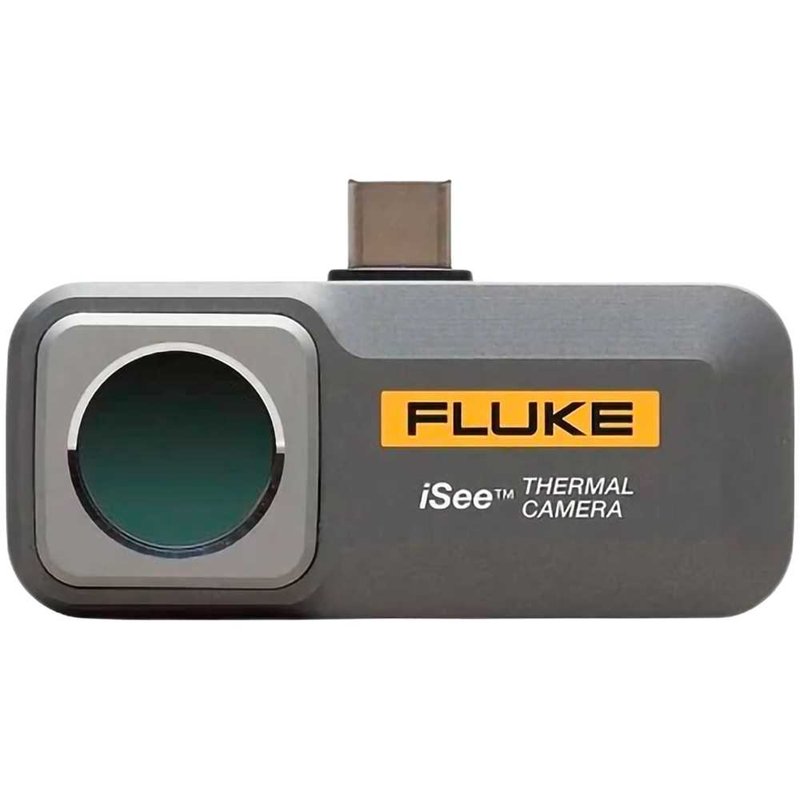
Best compact Fluke moduleFluke iSee TC01A thermal camera product reference

Phone module · FLUKE

Fluke iSee TC01A

Our take: The TC01A makes sense when you want a genuinely pocketable tool from a familiar test-equipment brand and already carry a compatible Android phone.

Native IR
256×192 native
Refresh
25 Hz
Best for
Electrical panels and portable troubleshooting
Read full review

Review basis: manufacturer documentation, model-specific listing details and a specification-led comparison with the other cameras in this catalogue.

What stands out

The Fluke iSee TC01A combines 256×192 native with a 25 Hz refresh rate and <50 mK thermal sensitivity. That combination is most useful for electrical panels and portable troubleshooting.

What it is like to use

In everyday use, the appeal is speed: connect it, open the app and save an image straight to the device you already carry. The trade-off is that the phone, connector and app become part of the tool, so compatibility matters just as much as the detector.

Where it fits best

Its stated measuring range is 14°F to 1022°F, while the format is phone module. The TC01A makes sense when you want a genuinely pocketable tool from a familiar test-equipment brand and already carry a compatible Android phone.

Drawbacks to consider

It is Android-only and phone-powered; verify the exact app and handset support before treating it as a daily work tool.

Our verdict

I would shortlist the Fluke iSee TC01A for electrical panels and portable troubleshooting when portability matters more than having a separate handheld instrument.

Who should skip it: Anyone whose priority is contradicted by the limitation below, or whose device, reporting workflow or working distance is not explicitly supported.

View full specifications
Detector / output
256×192 native
Refresh rate
25 Hz
Temperature range
14°F to 1022°F
Thermal sensitivity
<50 mK
Accuracy
±3.6°F (±2°C) or ±2%
Field of view
56° × 42°
Focus
Fixed focus
Dimensions
2.4 × 1.3 × 0.4 in (approx.)
Weight
0.8 oz (22 g)
Power / battery
Draws power from USB-C phone
Storage / connection
Saved to phone through iSee app
Durability
IP54 module
Compatibility
Android USB-C

What I’d watch for: It is Android-only and phone-powered; verify the exact app and handset support before treating it as a daily work tool.

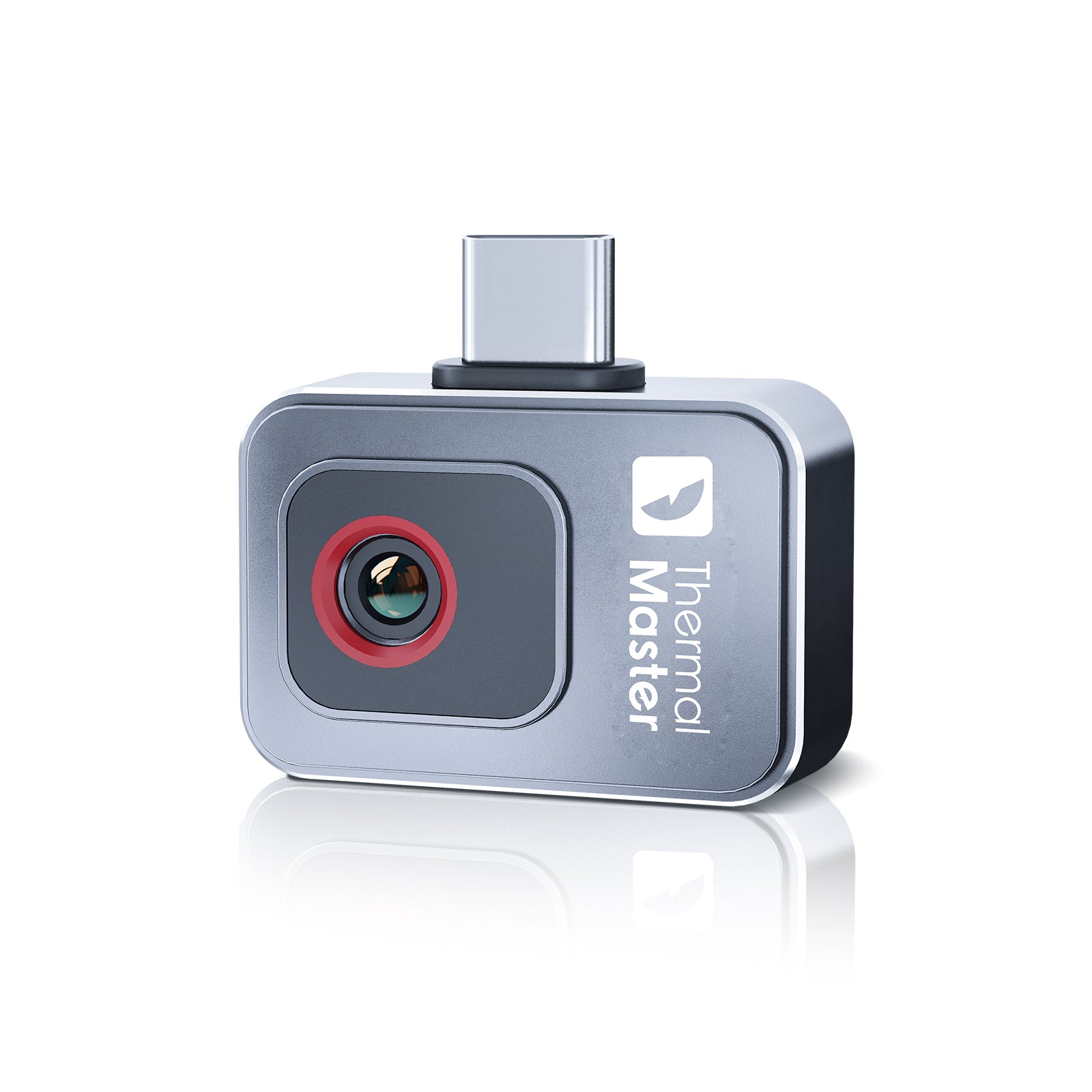
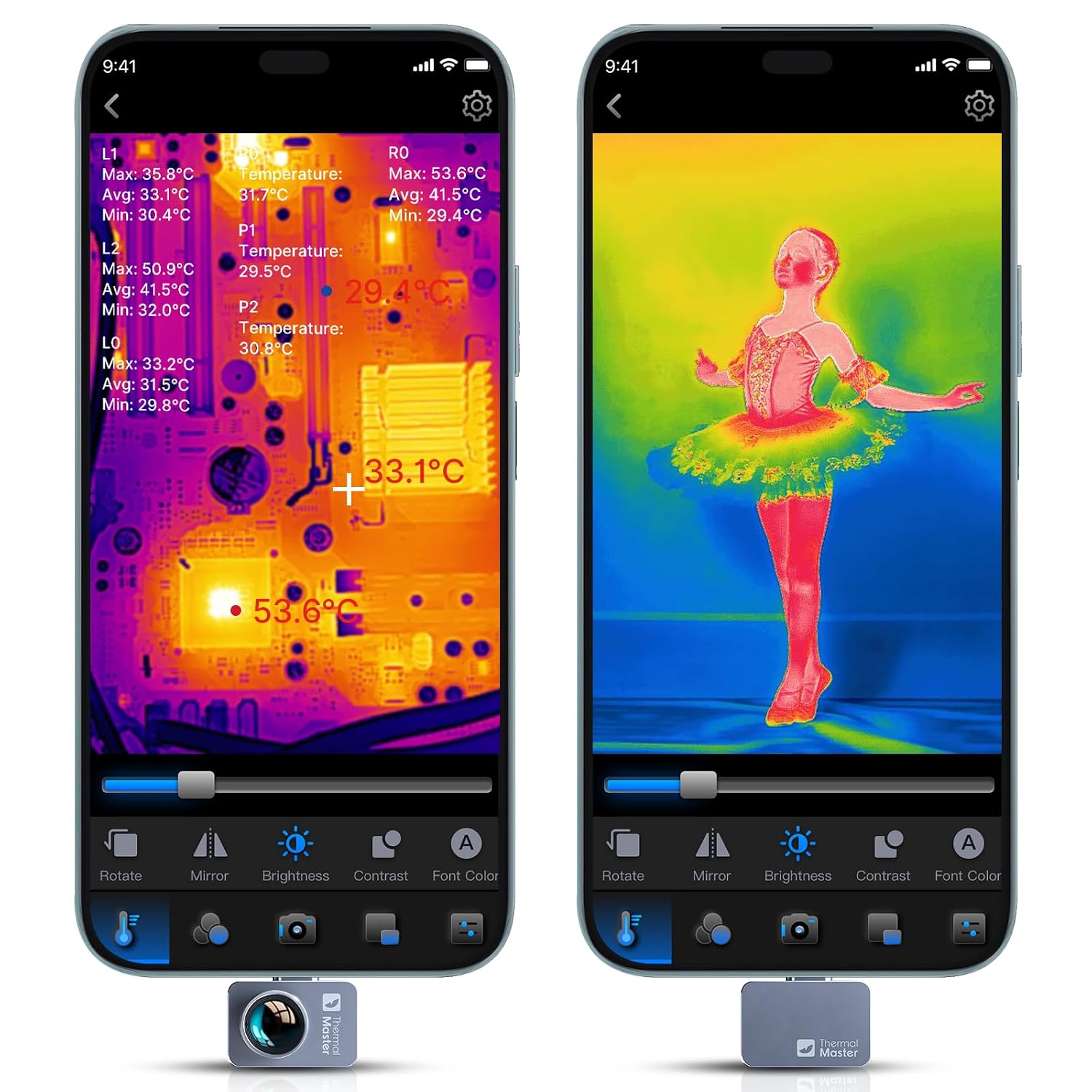
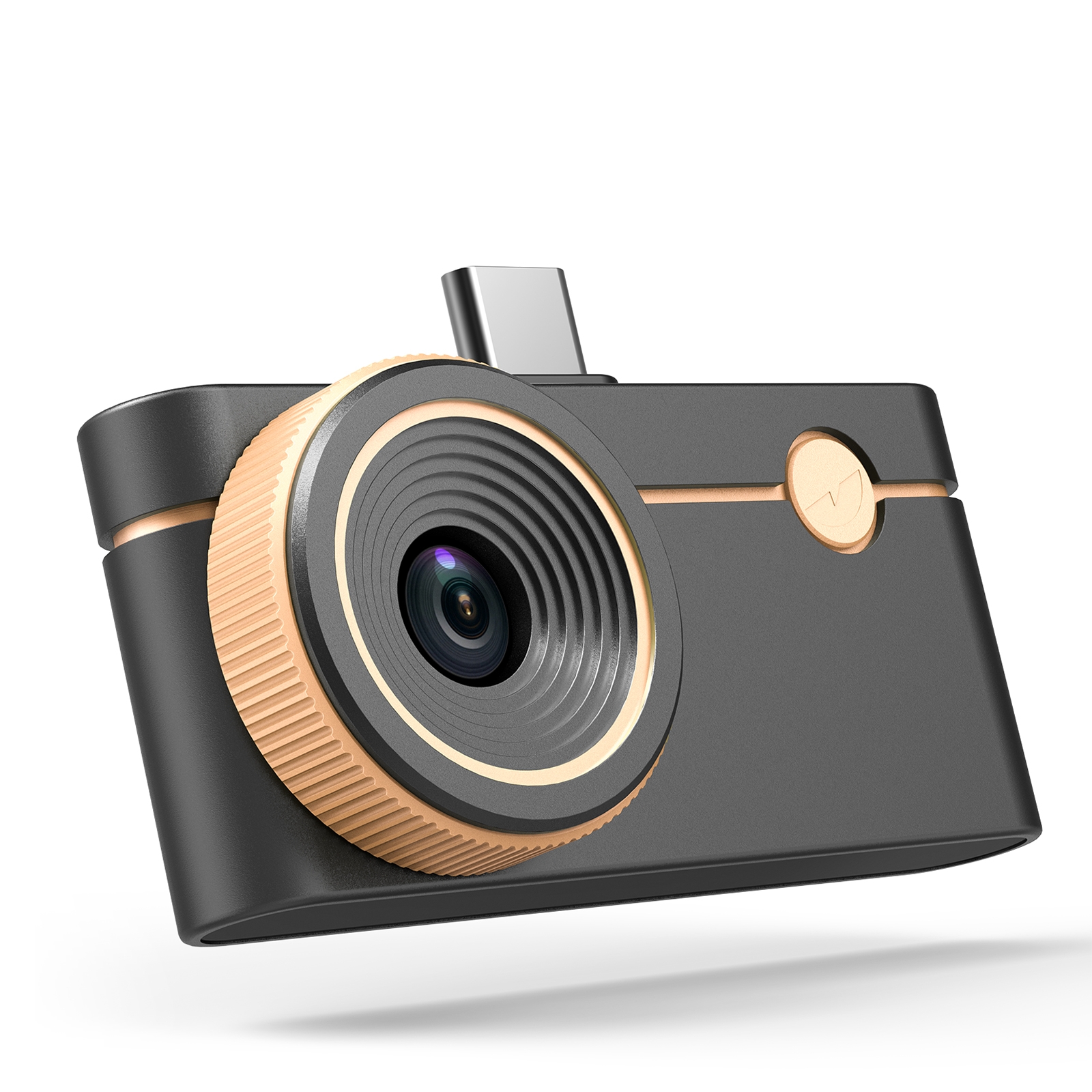
Best ultra-light moduleThermal Master P2 thermal camera product reference

Phone module · THERMAL MASTER

Thermal Master P2

Our take: At around ten grams, the P2 is the sort of camera you can leave in a small tool pouch and actually have with you when a heat problem appears.

Native IR
256×192 native / 512×384 enhanced
Refresh
25 Hz
Best for
Travel, home checks and quick scans
Read full review

Review basis: manufacturer documentation, model-specific listing details and a specification-led comparison with the other cameras in this catalogue.

What stands out

The Thermal Master P2 combines 256×192 native / 512×384 enhanced with a 25 Hz refresh rate and <40 mK thermal sensitivity. That combination is most useful for travel, home checks and quick scans.

What it is like to use

In everyday use, the appeal is speed: connect it, open the app and save an image straight to the device you already carry. The trade-off is that the phone, connector and app become part of the tool, so compatibility matters just as much as the detector.

Where it fits best

Its stated measuring range is -4°F to 1112°F, while the format is phone module. At around ten grams, the P2 is the sort of camera you can leave in a small tool pouch and actually have with you when a heat problem appears.

Drawbacks to consider

The fixed focus and phone dependency make it better for quick checks than formal reporting or fine PCB work.

Our verdict

I would shortlist the Thermal Master P2 for travel, home checks and quick scans when portability matters more than having a separate handheld instrument.

Who should skip it: Anyone whose priority is contradicted by the limitation below, or whose device, reporting workflow or working distance is not explicitly supported.

View full specifications
Detector / output
256×192 native / 512×384 enhanced
Refresh rate
25 Hz
Temperature range
-4°F to 1112°F
Thermal sensitivity
<40 mK
Accuracy
Up to ±2.7°F (±1.5°C) stated
Field of view
56° × 42°
Focus
Fixed focus
Dimensions
1.06 × 0.71 × 0.39 in (27 × 18 × 9.8 mm)
Weight
0.35 oz (10 g)
Power / battery
About 0.3 W from phone
Storage / connection
Saved to Android device
Durability
Metal module; carry case
Compatibility
Android USB-C

What I’d watch for: The fixed focus and phone dependency make it better for quick checks than formal reporting or fine PCB work.

Home, HVAC & general maintenance

Approachable standalone tools for drafts, insulation, heating and routine checks.

Best entry handheldTOPDON TC004 Mini thermal camera product reference

Handheld · TOPDON

TOPDON TC004 Mini

Our take: A compact standalone imager with hot/cold markers and enough sensitivity for drafts and HVAC checks.

Native IR
128×128 native / 240×240 enhanced
Refresh
25 Hz
Best for
DIY home checks
Read full review

Review basis: manufacturer documentation, model-specific listing details and a specification-led comparison with the other cameras in this catalogue.

What stands out

The TOPDON TC004 Mini combines 128×128 native / 240×240 enhanced with a 25 Hz refresh rate and <40 mK thermal sensitivity. That combination is most useful for diy home checks.

What it is like to use

For household and maintenance checks, the standalone controls are easier to live with than balancing a phone and an attachment. It is best used to compare patterns across walls, vents, windows and equipment—not to treat a single temperature reading as a diagnosis.

Where it fits best

Its stated measuring range is -4°F to 842°F, while the format is handheld. A compact standalone imager with hot/cold markers and enough sensitivity for drafts and HVAC checks.

Drawbacks to consider

Native resolution is modest and it does not record video.

Our verdict

The TOPDON TC004 Mini is a practical fit for diy home checks, particularly for someone who wants a self-contained camera that is ready whenever a problem appears.

Who should skip it: Anyone whose priority is contradicted by the limitation below, or whose device, reporting workflow or working distance is not explicitly supported.

View full specifications
Detector / output
128×128 native / 240×240 enhanced
Refresh rate
25 Hz
Temperature range
-4°F to 842°F
Thermal sensitivity
<40 mK
Accuracy
±3.6°F (±2°C) or ±2%
Field of view
40.6° × 30.6°
Focus
Fixed focus
Dimensions
7.2 × 2.6 × 2.2 in (approx.)
Weight
About 14 oz
Power / battery
Rechargeable; up to about 15 hours
Storage / connection
Internal image storage
Durability
IP54; 2 m drop rating
Compatibility
Standalone

What I’d watch for: Native resolution is modest and it does not record video.

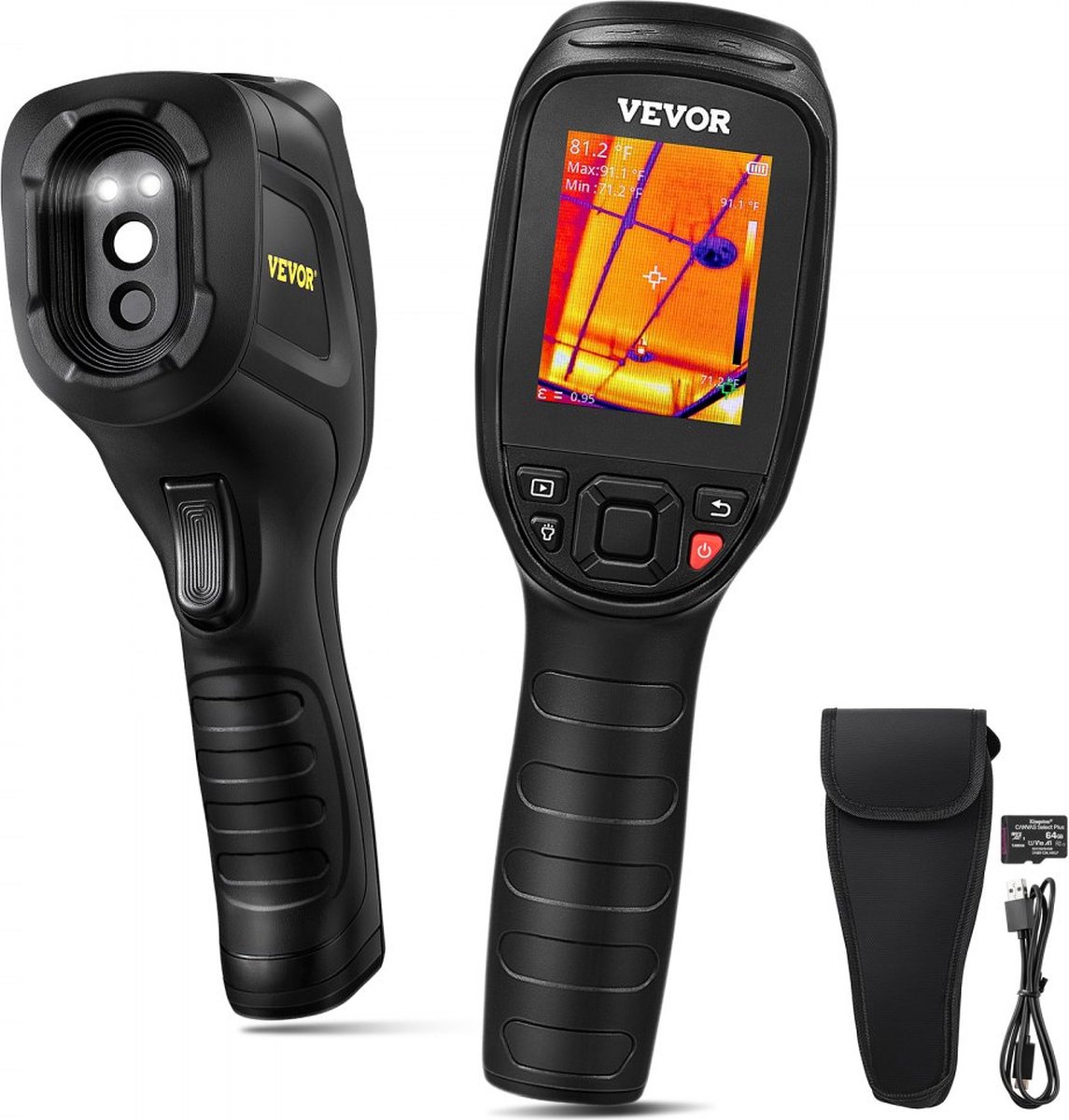
Best budget standalone alternativeVEVOR 160×120 Thermal Camera thermal camera product reference

Handheld · VEVOR

VEVOR 160×120 Thermal Camera

Our take: A standalone option with a visual camera, several palettes and a broad stated temperature range.

Native IR
160×120 native / 320×240 enhanced
Refresh
25 Hz
Best for
General maintenance
Read full review

Review basis: manufacturer documentation, model-specific listing details and a specification-led comparison with the other cameras in this catalogue.

What stands out

The VEVOR 160×120 Thermal Camera combines 160×120 native / 320×240 enhanced with a 25 Hz refresh rate and Not consistently published thermal sensitivity. That combination is most useful for general maintenance.

What it is like to use

For household and maintenance checks, the standalone controls are easier to live with than balancing a phone and an attachment. It is best used to compare patterns across walls, vents, windows and equipment—not to treat a single temperature reading as a diagnosis.

Where it fits best

Its stated measuring range is -4°F to 1022°F, while the format is handheld. A standalone option with a visual camera, several palettes and a broad stated temperature range.

Drawbacks to consider

The 320×240 figure is enhanced output; the detector is 160×120.

Our verdict

The VEVOR 160×120 Thermal Camera is a practical fit for general maintenance, particularly for someone who wants a self-contained camera that is ready whenever a problem appears.

Who should skip it: Anyone whose priority is contradicted by the limitation below, or whose device, reporting workflow or working distance is not explicitly supported.

View full specifications
Detector / output
160×120 native / 320×240 enhanced
Refresh rate
25 Hz
Temperature range
-4°F to 1022°F
Thermal sensitivity
Not consistently published
Accuracy
±3.6°F (±2°C) or ±2%
Field of view
Manufacturer listing does not state consistently
Focus
Fixed / automatic image fusion
Dimensions
Handheld body; seller dimensions vary by bundle
Weight
About 1.1 lb
Power / battery
Rechargeable Li-ion battery
Storage / connection
MicroSD / USB-C, bundle dependent
Durability
Verify current listing
Compatibility
Standalone

What I’d watch for: The 320×240 figure is enhanced output; the detector is 160×120.

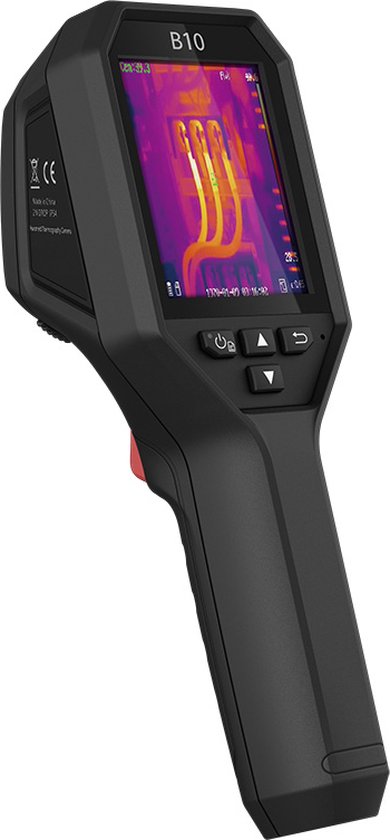
Best rugged home-and-HVAC pickHIKMICRO B10 thermal camera product reference

Handheld · HIKMICRO

HIKMICRO B10

Our take: A trigger-style camera with useful sensitivity, image storage and a wide temperature span.

Native IR
256×192 native / 320×240 enhanced
Refresh
25 Hz
Best for
HVAC and building maintenance
Read full review

Review basis: manufacturer documentation, model-specific listing details and a specification-led comparison with the other cameras in this catalogue.

What stands out

The HIKMICRO B10 combines 256×192 native / 320×240 enhanced with a 25 Hz refresh rate and <40 mK thermal sensitivity. That combination is most useful for hvac and building maintenance.

What it is like to use

For household and maintenance checks, the standalone controls are easier to live with than balancing a phone and an attachment. It is best used to compare patterns across walls, vents, windows and equipment—not to treat a single temperature reading as a diagnosis.

Where it fits best

Its stated measuring range is -4°F to 1022°F, while the format is handheld. A trigger-style camera with useful sensitivity, image storage and a wide temperature span.

Drawbacks to consider

Display resolution is not detector resolution; USB-C-to-USB-C transfer may not work.

Our verdict

The HIKMICRO B10 is a practical fit for hvac and building maintenance, particularly for someone who wants a self-contained camera that is ready whenever a problem appears.

Who should skip it: Anyone whose priority is contradicted by the limitation below, or whose device, reporting workflow or working distance is not explicitly supported.

View full specifications
Detector / output
256×192 native / 320×240 enhanced
Refresh rate
25 Hz
Temperature range
-4°F to 1022°F
Thermal sensitivity
<40 mK
Accuracy
±3.6°F (±2°C) or ±2%
Field of view
50° × 37.2°
Focus
Fixed focus
Dimensions
9.0 × 4.1 × 3.0 in (229 × 105 × 77 mm)
Weight
About 13.4 oz (380 g)
Power / battery
Rechargeable; about 6 hours
Storage / connection
16 GB eMMC; over 90,000 images stated
Durability
IP54; 2 m drop rating
Compatibility
Standalone

What I’d watch for: Display resolution is not detector resolution; USB-C-to-USB-C transfer may not work.

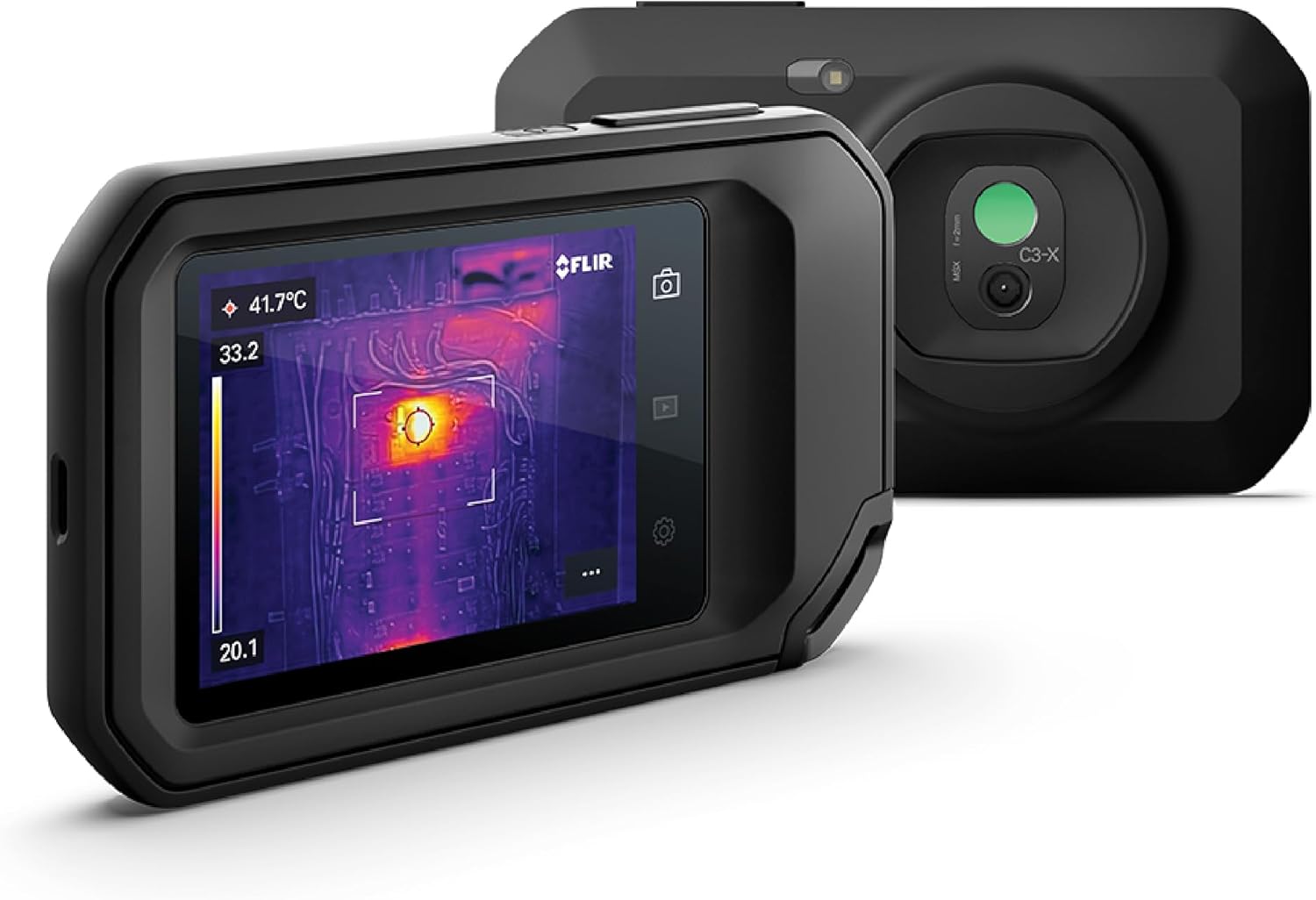
Best simple FLIR pocket cameraFLIR C3-X thermal camera product reference

Pocket handheld · FLIR

FLIR C3-X

Our take: For someone who wants a durable pocket camera without relying on a phone, the C3-X keeps the controls and reporting process straightforward.

Native IR
128×96 native with MSX
Refresh
8.7 Hz
Best for
Property maintenance and everyday checks
Read full review

Review basis: manufacturer documentation, model-specific listing details and a specification-led comparison with the other cameras in this catalogue.

What stands out

The FLIR C3-X combines 128×96 native with msx with a 8.7 Hz refresh rate and <70 mK thermal sensitivity. That combination is most useful for property maintenance and everyday checks.

What it is like to use

For household and maintenance checks, the standalone controls are easier to live with than balancing a phone and an attachment. It is best used to compare patterns across walls, vents, windows and equipment—not to treat a single temperature reading as a diagnosis.

Where it fits best

Its stated measuring range is 32°F to 572°F, while the format is pocket handheld. For someone who wants a durable pocket camera without relying on a phone, the C3-X keeps the controls and reporting process straightforward.

Drawbacks to consider

The 128×96 detector is modest for small or distant targets, so it suits broad building patterns better than tiny electrical components.

Our verdict

The FLIR C3-X is a practical fit for property maintenance and everyday checks, particularly for someone who wants a self-contained camera that is ready whenever a problem appears.

Who should skip it: Anyone whose priority is contradicted by the limitation below, or whose device, reporting workflow or working distance is not explicitly supported.

View full specifications
Detector / output
128×96 native with MSX
Refresh rate
8.7 Hz
Temperature range
32°F to 572°F
Thermal sensitivity
<70 mK
Accuracy
±5.4°F (±3°C) or ±3%
Field of view
53.6° × 42°
Focus
Focus-free
Dimensions
5.4 × 3.3 × 0.9 in (138 × 84 × 24 mm)
Weight
6.7 oz (190 g)
Power / battery
Rechargeable; up to about 4 hours
Storage / connection
Onboard plus Wi-Fi / FLIR Ignite
Durability
IP54; 2 m drop rating
Compatibility
Standalone; Wi-Fi and FLIR Ignite

What I’d watch for: The 128×96 detector is modest for small or distant targets, so it suits broad building patterns better than tiny electrical components.

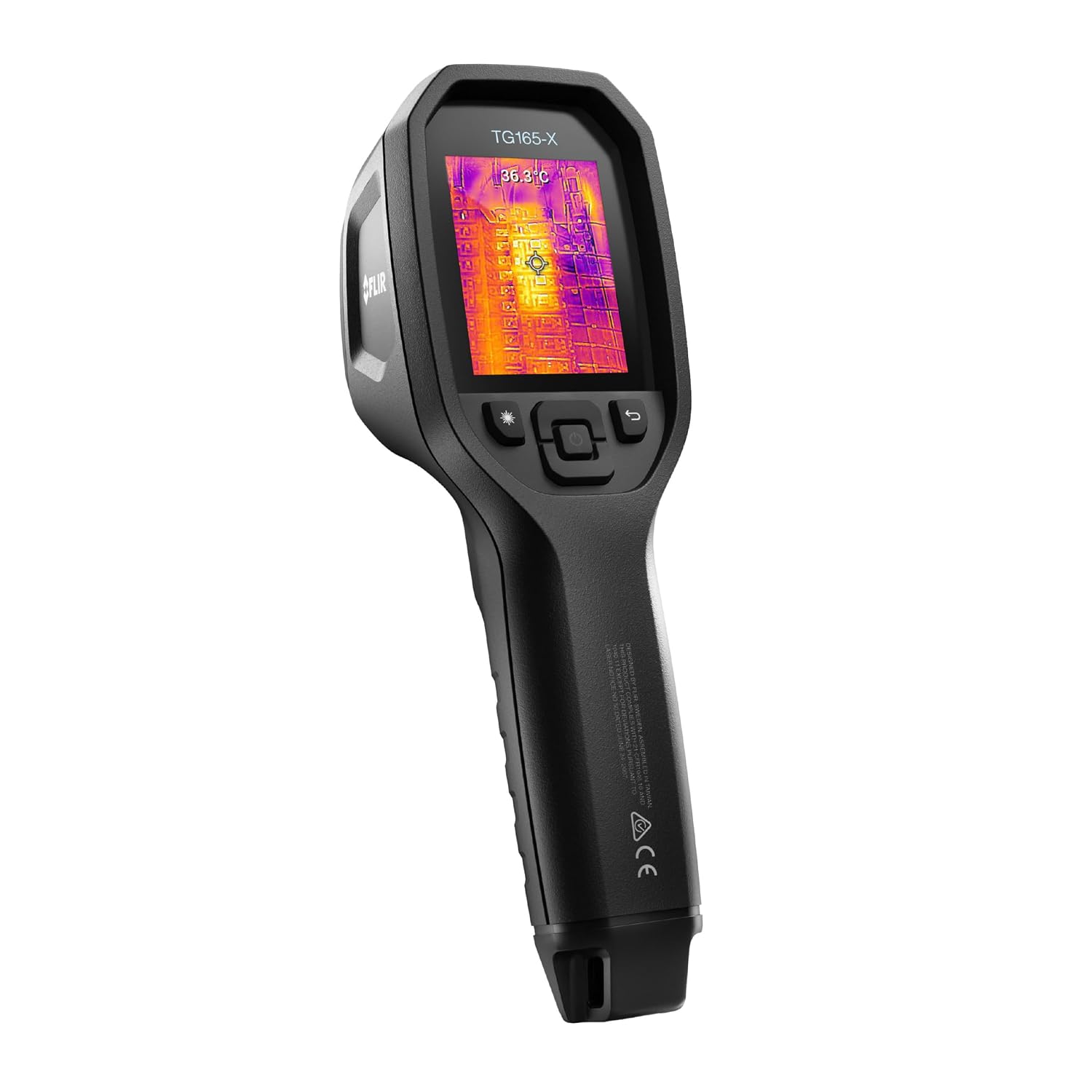
Best thermal spot cameraFLIR TG165-X thermal camera product reference

Handheld spot camera · FLIR

FLIR TG165-X

Our take: The TG165-X works best as a quick diagnostic tool: the bullseye laser shows the measured area while FLIR's MSX overlay makes low-resolution thermal patterns easier to relate to the real object.

Native IR
80×60 native with MSX detail enhancement
Refresh
8.7 Hz
Best for
Fast HVAC, electrical and building checks
Read full review

Review basis: manufacturer documentation, model-specific listing details and a specification-led comparison with the other cameras in this catalogue.

What stands out

The FLIR TG165-X combines 80×60 native with msx detail enhancement with a 8.7 Hz refresh rate and <70 mK thermal sensitivity. That combination is most useful for fast hvac, electrical and building checks.

What it is like to use

For household and maintenance checks, the standalone controls are easier to live with than balancing a phone and an attachment. It is best used to compare patterns across walls, vents, windows and equipment—not to treat a single temperature reading as a diagnosis.

Where it fits best

Its stated measuring range is -13°F to 572°F, while the format is handheld spot camera. The TG165-X works best as a quick diagnostic tool: the bullseye laser shows the measured area while FLIR's MSX overlay makes low-resolution thermal patterns easier to relate to the real object.

Drawbacks to consider

Its 80×60 detector is too coarse for small or distant faults, and the 8.7 Hz refresh is less fluid than modern 25 Hz handhelds.

Our verdict

The FLIR TG165-X is a practical fit for fast hvac, electrical and building checks, particularly for someone who wants a self-contained camera that is ready whenever a problem appears.

Who should skip it: Anyone whose priority is contradicted by the limitation below, or whose device, reporting workflow or working distance is not explicitly supported.

View full specifications
Detector / output
80×60 native with MSX detail enhancement
Refresh rate
8.7 Hz
Temperature range
-13°F to 572°F
Thermal sensitivity
<70 mK
Accuracy
±2.7°F to ±5.4°F depending on temperature band
Field of view
71° × 56°
Focus
Focus-free; minimum focus about 12 in (30 cm)
Dimensions
8.3 × 2.5 × 3.2 in (210 × 64 × 81 mm)
Weight
13.9 oz (394 g), battery included
Power / battery
Rechargeable battery; about 5 hours scanning
Storage / connection
4 GB eMMC; USB-C transfer
Durability
IP54; 2 m drop rating
Compatibility
Standalone; USB-C and FLIR Thermal Studio

What I’d watch for: Its 80×60 detector is too coarse for small or distant faults, and the 8.7 Hz refresh is less fluid than modern 25 Hz handhelds.

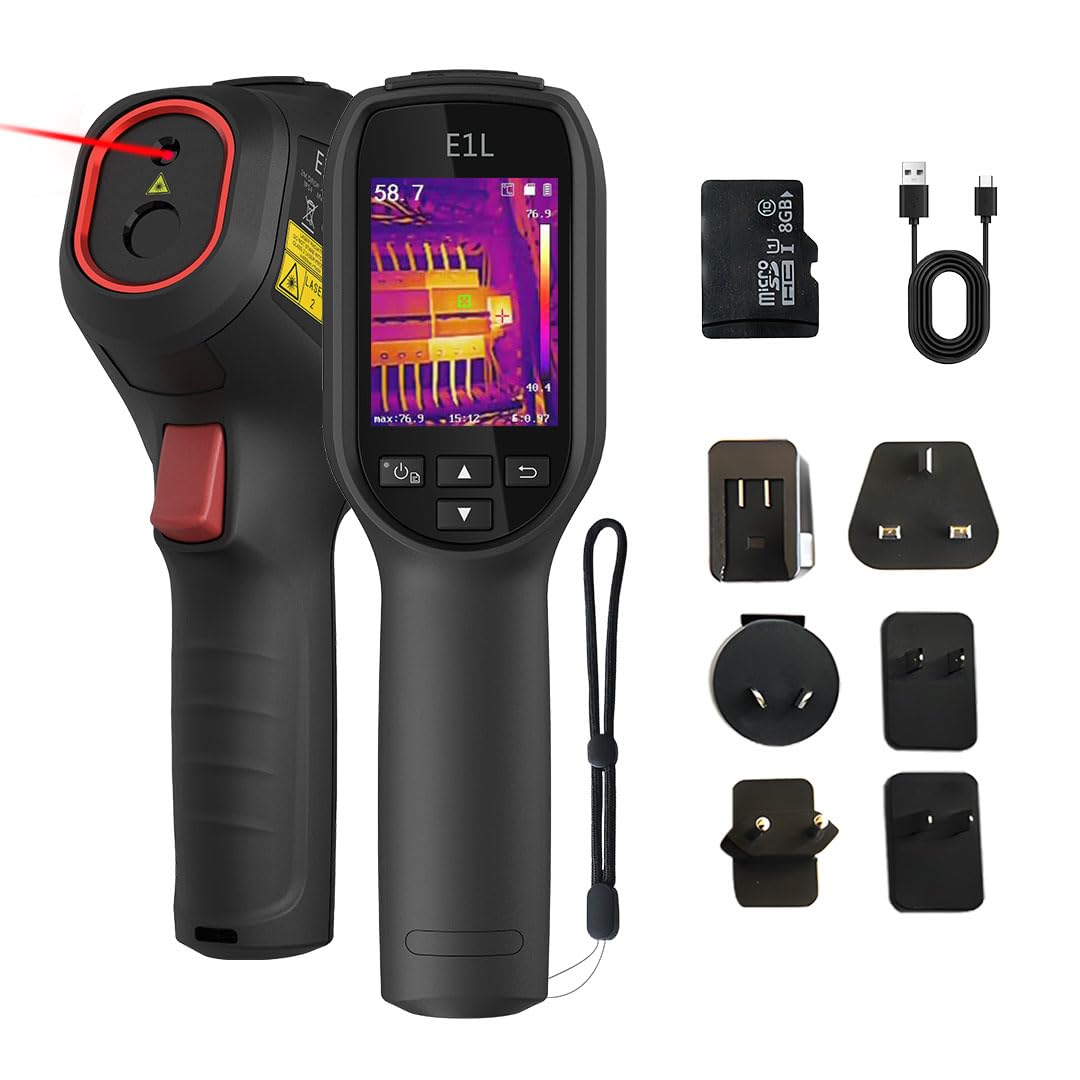
Best straightforward trigger cameraHIKMICRO E1L thermal camera product reference

Handheld · HIKMICRO

HIKMICRO E1L

Our take: The E1L is an easy camera to understand and carry: a smooth 25 Hz image, useful sensitivity and laser guidance cover most broad household and maintenance checks without relying on a phone.

Native IR
160×120 native / 320×240 enhanced
Refresh
25 Hz
Best for
Home energy, HVAC and routine maintenance
Read full review

Review basis: manufacturer documentation, model-specific listing details and a specification-led comparison with the other cameras in this catalogue.

What stands out

The HIKMICRO E1L combines 160×120 native / 320×240 enhanced with a 25 Hz refresh rate and <40 mK thermal sensitivity. That combination is most useful for home energy, hvac and routine maintenance.

What it is like to use

For household and maintenance checks, the standalone controls are easier to live with than balancing a phone and an attachment. It is best used to compare patterns across walls, vents, windows and equipment—not to treat a single temperature reading as a diagnosis.

Where it fits best

Its stated measuring range is -4°F to 1022°F, while the format is handheld. The E1L is an easy camera to understand and carry: a smooth 25 Hz image, useful sensitivity and laser guidance cover most broad household and maintenance checks without relying on a phone.

Drawbacks to consider

Its native detector is 160×120—the 320×240 figure is enhanced output—and it lacks the visible-light blending and richer reporting workflow of newer HIKMICRO models.

Our verdict

The HIKMICRO E1L is a practical fit for home energy, hvac and routine maintenance, particularly for someone who wants a self-contained camera that is ready whenever a problem appears.

Who should skip it: Anyone whose priority is contradicted by the limitation below, or whose device, reporting workflow or working distance is not explicitly supported.

View full specifications
Detector / output
160×120 native / 320×240 enhanced
Refresh rate
25 Hz
Temperature range
-4°F to 1022°F
Thermal sensitivity
<40 mK
Accuracy
±3.6°F (±2°C) or ±2% under stated conditions
Field of view
50° × 37.2°
Focus
Fixed focus with laser pointer
Dimensions
8.7 × 2.9 × 3.0 in (approximate handheld body)
Weight
12.3 oz (350 g)
Power / battery
Rechargeable battery; up to about 8 hours
Storage / connection
Internal image storage; USB connection and PC analysis
Durability
IP54; 2 m drop rating
Compatibility
Standalone with Windows analysis software

What I’d watch for: Its native detector is 160×120—the 320×240 figure is enhanced output—and it lacks the visible-light blending and richer reporting workflow of newer HIKMICRO models.

Professional inspection & reporting

Higher-spec cameras for documented electrical, mechanical and building work.

Best basic wireless flexibilityFLIR Edge thermal camera product reference

Wireless module · FLIR

FLIR Edge

Our take: A detachable wireless design for viewing behind appliances, above ceilings and around awkward equipment.

Native IR
80×60 native / 240×180 enhanced
Refresh
8.7 Hz
Best for
Hard-to-reach inspections
Read full review

Review basis: manufacturer documentation, model-specific listing details and a specification-led comparison with the other cameras in this catalogue.

What stands out

The FLIR Edge combines 80×60 native / 240×180 enhanced with a 8.7 Hz refresh rate and 150 mK thermal sensitivity. That combination is most useful for hard-to-reach inspections.

What it is like to use

For repeated inspection work, the stronger case is the complete workflow: reliable handling, saved images and a clearer route to documentation. A professional buyer should still weigh reporting software, battery life and focus against detector resolution.

Where it fits best

Its stated measuring range is -4°F to 248°F, while the format is wireless module. A detachable wireless design for viewing behind appliances, above ceilings and around awkward equipment.

Drawbacks to consider

Its 80×60 detector is basic; choose it for wireless positioning rather than fine thermal detail.

Our verdict

I would consider the FLIR Edge for hard-to-reach inspections when repeatable field use and documentation justify moving beyond a basic phone module.

Who should skip it: Anyone whose priority is contradicted by the limitation below, or whose device, reporting workflow or working distance is not explicitly supported.

View full specifications
Detector / output
80×60 native / 240×180 enhanced
Refresh rate
8.7 Hz
Temperature range
-4°F to 248°F
Thermal sensitivity
150 mK
Accuracy
±5.4°F (±3°C) or ±5%
Field of view
54° × 42°
Focus
Fixed, minimum about 12 in (30 cm)
Dimensions
5.9 × 1.4 × 1.5 in (149 × 35 × 37 mm)
Weight
5.4 oz (153 g)
Power / battery
Rechargeable; up to about 2.5 hours
Storage / connection
Images saved through the FLIR app
Durability
IP54; drop tested to 2 m
Compatibility
iOS + Android wireless

What I’d watch for: Its 80×60 detector is basic; choose it for wireless positioning rather than fine thermal detail.

Best long-battery professional valueTOPDON TC005 thermal camera product reference

Handheld · TOPDON

TOPDON TC005

Our take: A rugged dual-camera handheld with laser targeting, visible-light blending and long stated battery life.

Native IR
256×192 native / 512×384 enhanced
Refresh
25 Hz
Best for
Electrical, mechanical and building work
Read full review

Review basis: manufacturer documentation, model-specific listing details and a specification-led comparison with the other cameras in this catalogue.

What stands out

The TOPDON TC005 combines 256×192 native / 512×384 enhanced with a 25 Hz refresh rate and <40 mK thermal sensitivity. That combination is most useful for electrical, mechanical and building work.

What it is like to use

For repeated inspection work, the stronger case is the complete workflow: reliable handling, saved images and a clearer route to documentation. A professional buyer should still weigh reporting software, battery life and focus against detector resolution.

Where it fits best

Its stated measuring range is -4°F to 1022°F, while the format is handheld. A rugged dual-camera handheld with laser targeting, visible-light blending and long stated battery life.

Drawbacks to consider

Larger and costlier than phone modules; verify the exact bundle and warranty seller.

Our verdict

I would consider the TOPDON TC005 for electrical, mechanical and building work when repeatable field use and documentation justify moving beyond a basic phone module.

Who should skip it: Anyone whose priority is contradicted by the limitation below, or whose device, reporting workflow or working distance is not explicitly supported.

View full specifications
Detector / output
256×192 native / 512×384 enhanced
Refresh rate
25 Hz
Temperature range
-4°F to 1022°F
Thermal sensitivity
<40 mK
Accuracy
±3.6°F (±2°C) or ±2%
Field of view
56° × 42°
Focus
Fixed focus with laser target
Dimensions
9.3 × 3.9 × 3.0 in (237 × 100 × 76 mm)
Weight
About 1.2 lb (540 g)
Power / battery
Rechargeable; up to about 8 hours
Storage / connection
Internal storage plus USB PC analysis
Durability
IP54; 2 m drop rating
Compatibility
Standalone + PC analysis

What I’d watch for: Larger and costlier than phone modules; verify the exact bundle and warranty seller.

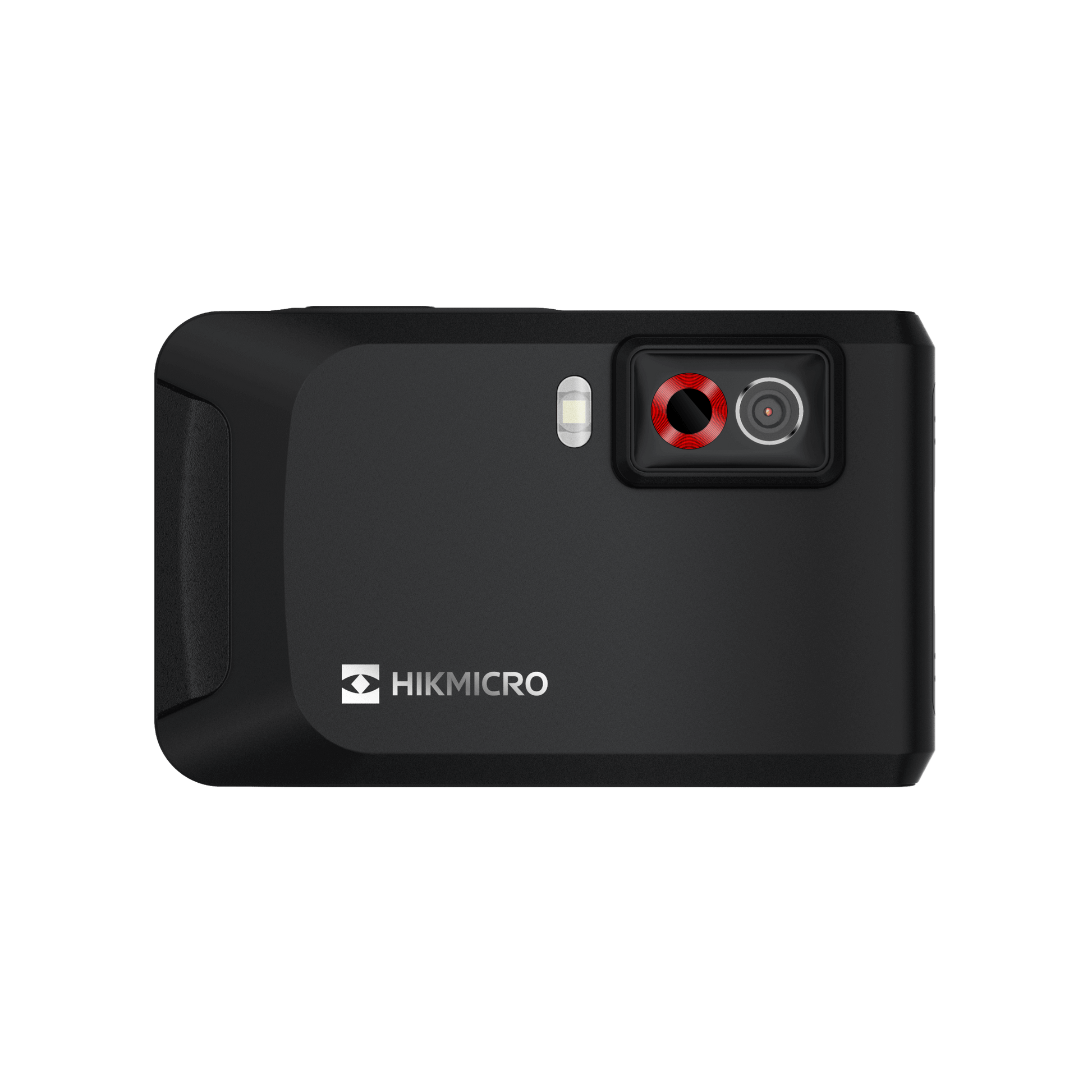
Best pocket reporting workflowHIKMICRO Pocket2 thermal camera product reference

Pocket handheld · HIKMICRO

HIKMICRO Pocket2

Our take: A professional pocket camera with touchscreen, visible camera, radiometric storage and Wi-Fi reporting.

Native IR
256×192 native
Refresh
25 Hz
Best for
Reports + standalone use
Read full review

Review basis: manufacturer documentation, model-specific listing details and a specification-led comparison with the other cameras in this catalogue.

What stands out

The HIKMICRO Pocket2 combines 256×192 native with a 25 Hz refresh rate and <40 mK thermal sensitivity. That combination is most useful for reports + standalone use.

What it is like to use

For repeated inspection work, the stronger case is the complete workflow: reliable handling, saved images and a clearer route to documentation. A professional buyer should still weigh reporting software, battery life and focus against detector resolution.

Where it fits best

Its stated measuring range is -4°F to 752°F, while the format is pocket handheld. A professional pocket camera with touchscreen, visible camera, radiometric storage and Wi-Fi reporting.

Drawbacks to consider

Costs more than phone modules; macro work needs an additional lens and stand.

Our verdict

I would consider the HIKMICRO Pocket2 for reports + standalone use when repeatable field use and documentation justify moving beyond a basic phone module.

Who should skip it: Anyone whose priority is contradicted by the limitation below, or whose device, reporting workflow or working distance is not explicitly supported.

View full specifications
Detector / output
256×192 native
Refresh rate
25 Hz
Temperature range
-4°F to 752°F
Thermal sensitivity
<40 mK
Accuracy
±3.6°F (±2°C) or ±2%
Field of view
50° × 37.2°
Focus
Fixed focus
Dimensions
5.4 × 3.4 × 0.9 in (138 × 85 × 24 mm)
Weight
About 7.7 oz (218 g)
Power / battery
Rechargeable; about 4 hours
Storage / connection
16 GB eMMC; radiometric images/video
Durability
IP54; 2 m drop rating
Compatibility
Standalone + Wi-Fi app

What I’d watch for: Costs more than phone modules; macro work needs an additional lens and stand.

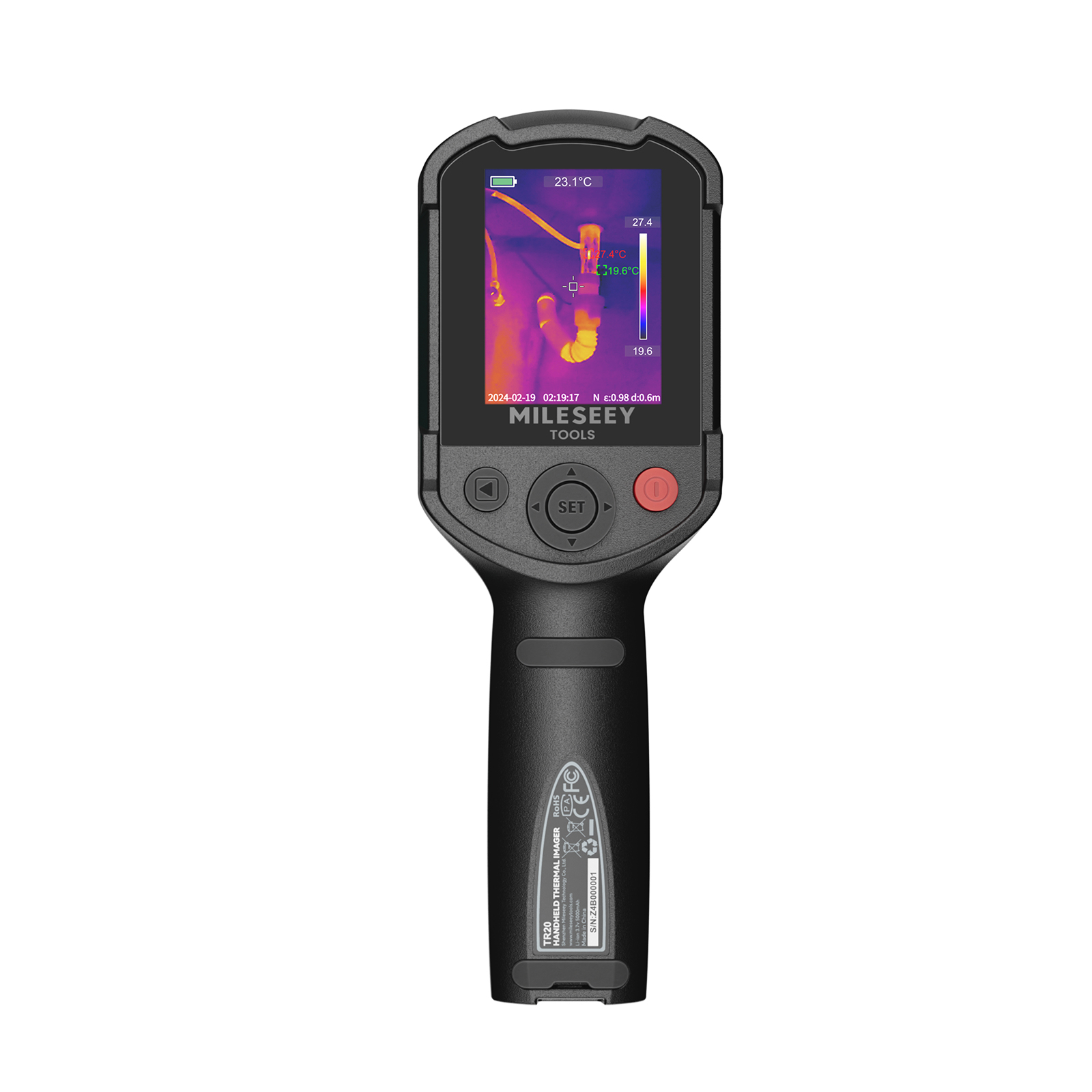
Best high-refresh handheldMiLESEEY TR20 Pro thermal camera product reference

Handheld · MiLESEEY

MiLESEEY TR20 Pro

Our take: A 320×240 handheld with visible-light imaging, alarms, recording and PC analysis support.

Native IR
320×240 native
Refresh
25 Hz
Best for
Machinery and moving equipment
Read full review

Review basis: manufacturer documentation, model-specific listing details and a specification-led comparison with the other cameras in this catalogue.

What stands out

The MiLESEEY TR20 Pro combines 320×240 native with a 25 Hz refresh rate and <40 mK thermal sensitivity. That combination is most useful for machinery and moving equipment.

What it is like to use

For repeated inspection work, the stronger case is the complete workflow: reliable handling, saved images and a clearer route to documentation. A professional buyer should still weigh reporting software, battery life and focus against detector resolution.

Where it fits best

Its stated measuring range is -4°F to 1022°F, while the format is handheld. A 320×240 handheld with visible-light imaging, alarms, recording and PC analysis support.

Drawbacks to consider

A newer model with a shorter long-term support record than established industrial brands.

Our verdict

I would consider the MiLESEEY TR20 Pro for machinery and moving equipment when repeatable field use and documentation justify moving beyond a basic phone module.

Who should skip it: Anyone whose priority is contradicted by the limitation below, or whose device, reporting workflow or working distance is not explicitly supported.

View full specifications
Detector / output
320×240 native
Refresh rate
25 Hz
Temperature range
-4°F to 1022°F
Thermal sensitivity
<40 mK
Accuracy
±3.6°F (±2°C) or ±2%
Field of view
50° × 37.2°
Focus
Fixed focus
Dimensions
10.0 × 3.6 × 3.0 in (approx.)
Weight
About 1.3 lb
Power / battery
Rechargeable; up to about 8 hours
Storage / connection
Images/video plus PC analysis
Durability
IP54; 1 m drop rating
Compatibility
Standalone + PC software

What I’d watch for: A newer model with a shorter long-term support record than established industrial brands.

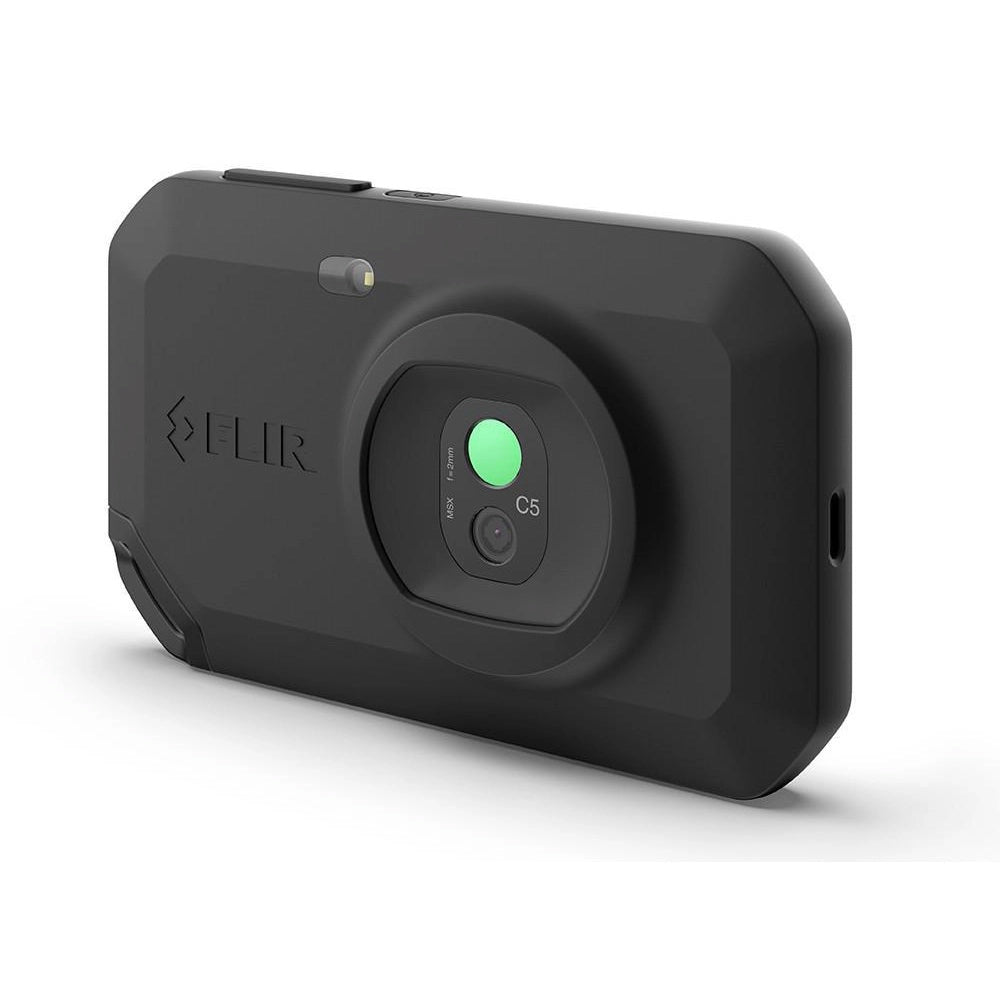
Best pocket reporting cameraFLIR C5 thermal camera product reference

Pocket handheld · FLIR

FLIR C5

Our take: The C5 is not the highest-resolution option here, but its visible camera, MSX edge detail and cloud-ready reporting make it unusually easy to use on a real inspection round.

Native IR
160×120 native with MSX
Refresh
8.7 Hz
Best for
Building reports and field documentation
Read full review

Review basis: manufacturer documentation, model-specific listing details and a specification-led comparison with the other cameras in this catalogue.

What stands out

The FLIR C5 combines 160×120 native with msx with a 8.7 Hz refresh rate and <70 mK thermal sensitivity. That combination is most useful for building reports and field documentation.

What it is like to use

For repeated inspection work, the stronger case is the complete workflow: reliable handling, saved images and a clearer route to documentation. A professional buyer should still weigh reporting software, battery life and focus against detector resolution.

Where it fits best

Its stated measuring range is -4°F to 752°F, while the format is pocket handheld. The C5 is not the highest-resolution option here, but its visible camera, MSX edge detail and cloud-ready reporting make it unusually easy to use on a real inspection round.

Drawbacks to consider

Its 8.7 Hz image feels less fluid than a 25 Hz camera, and you are paying for the workflow as well as the detector.

Our verdict

I would consider the FLIR C5 for building reports and field documentation when repeatable field use and documentation justify moving beyond a basic phone module.

Who should skip it: Anyone whose priority is contradicted by the limitation below, or whose device, reporting workflow or working distance is not explicitly supported.

View full specifications
Detector / output
160×120 native with MSX
Refresh rate
8.7 Hz
Temperature range
-4°F to 752°F
Thermal sensitivity
<70 mK
Accuracy
±5.4°F (±3°C) or ±3%
Field of view
54° × 42°
Focus
Focus-free
Dimensions
5.4 × 3.3 × 0.9 in (138 × 84 × 24 mm)
Weight
6.7 oz (190 g)
Power / battery
Rechargeable; up to about 4 hours
Storage / connection
Onboard plus Wi-Fi / FLIR Ignite
Durability
IP54; 2 m drop rating
Compatibility
Standalone; Wi-Fi and FLIR Ignite

What I’d watch for: Its 8.7 Hz image feels less fluid than a 25 Hz camera, and you are paying for the workflow as well as the detector.

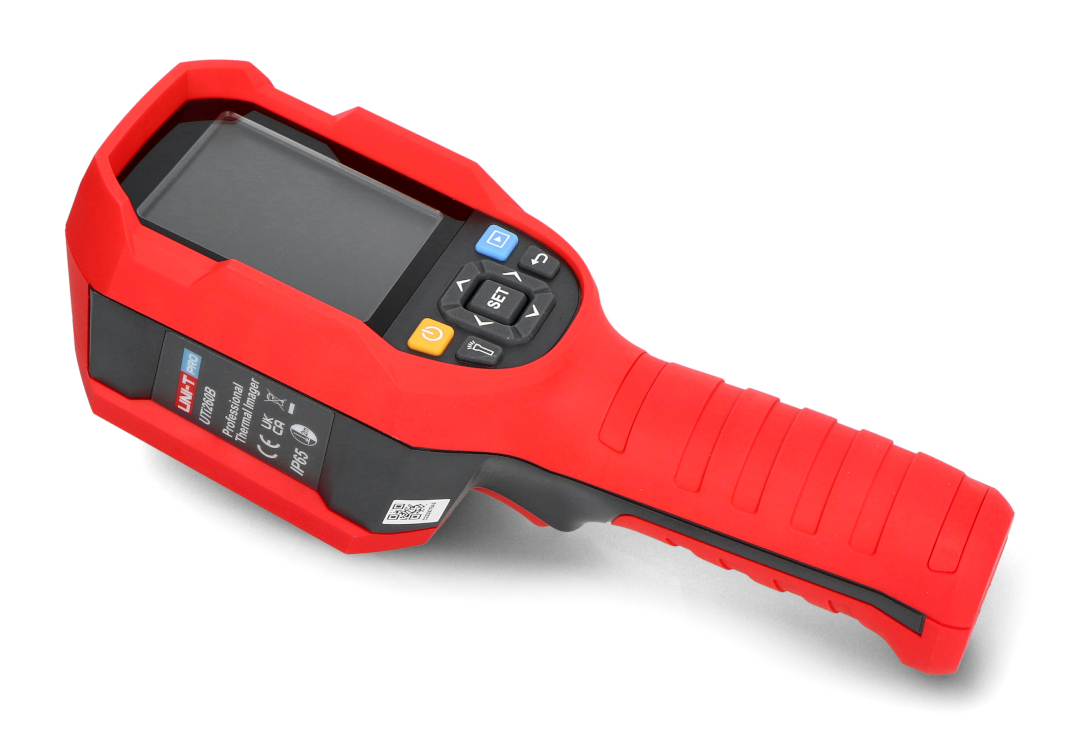
Best rugged valueUNI-T UTi260B thermal camera product reference

Handheld · UNI-T

UNI-T UTi260B

Our take: This is a sensible middle ground for field work: a native 256×192 detector, smooth 25 Hz refresh and a body that is less precious than a phone attachment.

Native IR
256×192 native
Refresh
25 Hz
Best for
Electrical, mechanical and HVAC rounds
Read full review

Review basis: manufacturer documentation, model-specific listing details and a specification-led comparison with the other cameras in this catalogue.

What stands out

The UNI-T UTi260B combines 256×192 native with a 25 Hz refresh rate and <50 mK thermal sensitivity. That combination is most useful for electrical, mechanical and hvac rounds.

What it is like to use

For repeated inspection work, the stronger case is the complete workflow: reliable handling, saved images and a clearer route to documentation. A professional buyer should still weigh reporting software, battery life and focus against detector resolution.

Where it fits best

Its stated measuring range is -4°F to 1022°F, while the format is handheld. This is a sensible middle ground for field work: a native 256×192 detector, smooth 25 Hz refresh and a body that is less precious than a phone attachment.

Drawbacks to consider

It is considerably heavier than pocket models, and its reporting software is less polished than FLIR’s ecosystem.

Our verdict

I would consider the UNI-T UTi260B for electrical, mechanical and hvac rounds when repeatable field use and documentation justify moving beyond a basic phone module.

Who should skip it: Anyone whose priority is contradicted by the limitation below, or whose device, reporting workflow or working distance is not explicitly supported.

View full specifications
Detector / output
256×192 native
Refresh rate
25 Hz
Temperature range
-4°F to 1022°F
Thermal sensitivity
<50 mK
Accuracy
±3.6°F (±2°C) or ±2%
Field of view
56° × 42°
Focus
Fixed focus
Dimensions
9.3 × 3.0 × 3.3 in (236 × 75 × 84 mm)
Weight
About 1.3 lb (600 g)
Power / battery
Rechargeable Li-ion battery
Storage / connection
MicroSD card and USB-C
Durability
IP65; 2 m drop rating
Compatibility
Standalone with microSD and USB-C

What I’d watch for: It is considerably heavier than pocket models, and its reporting software is less polished than FLIR’s ecosystem.

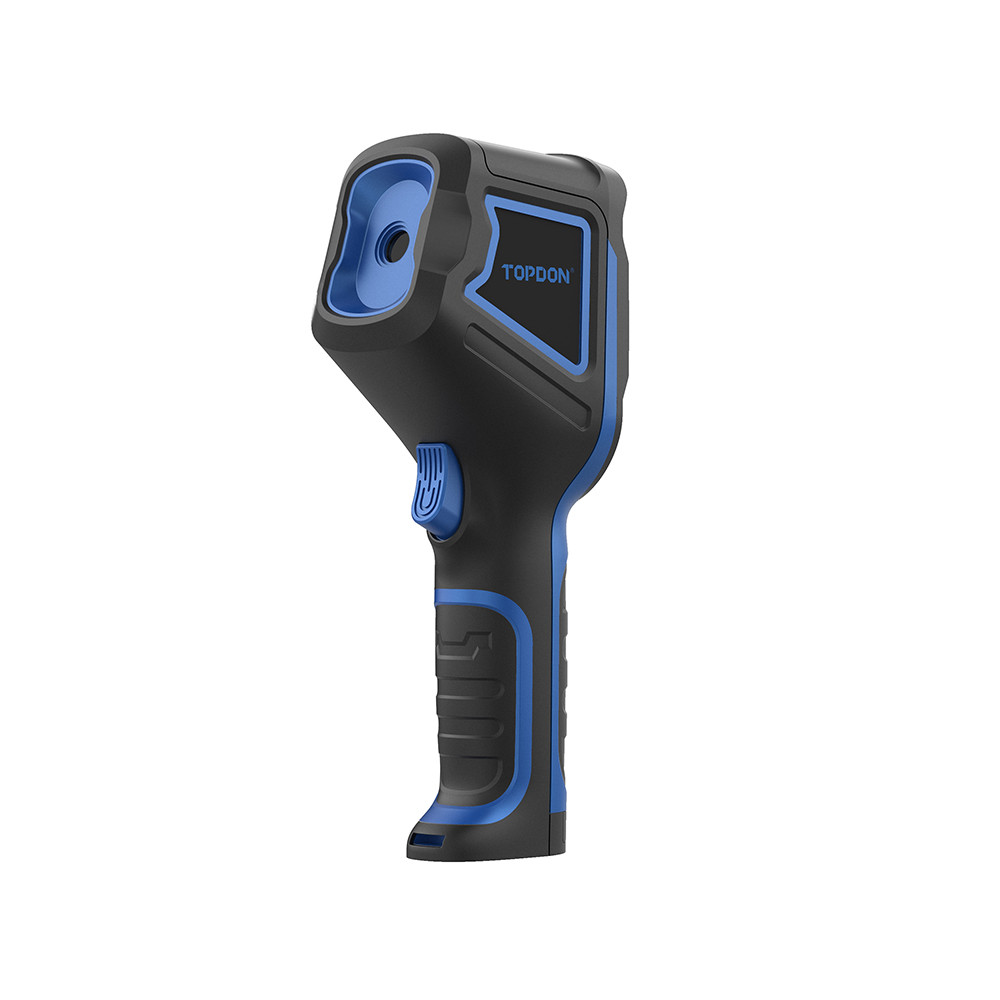
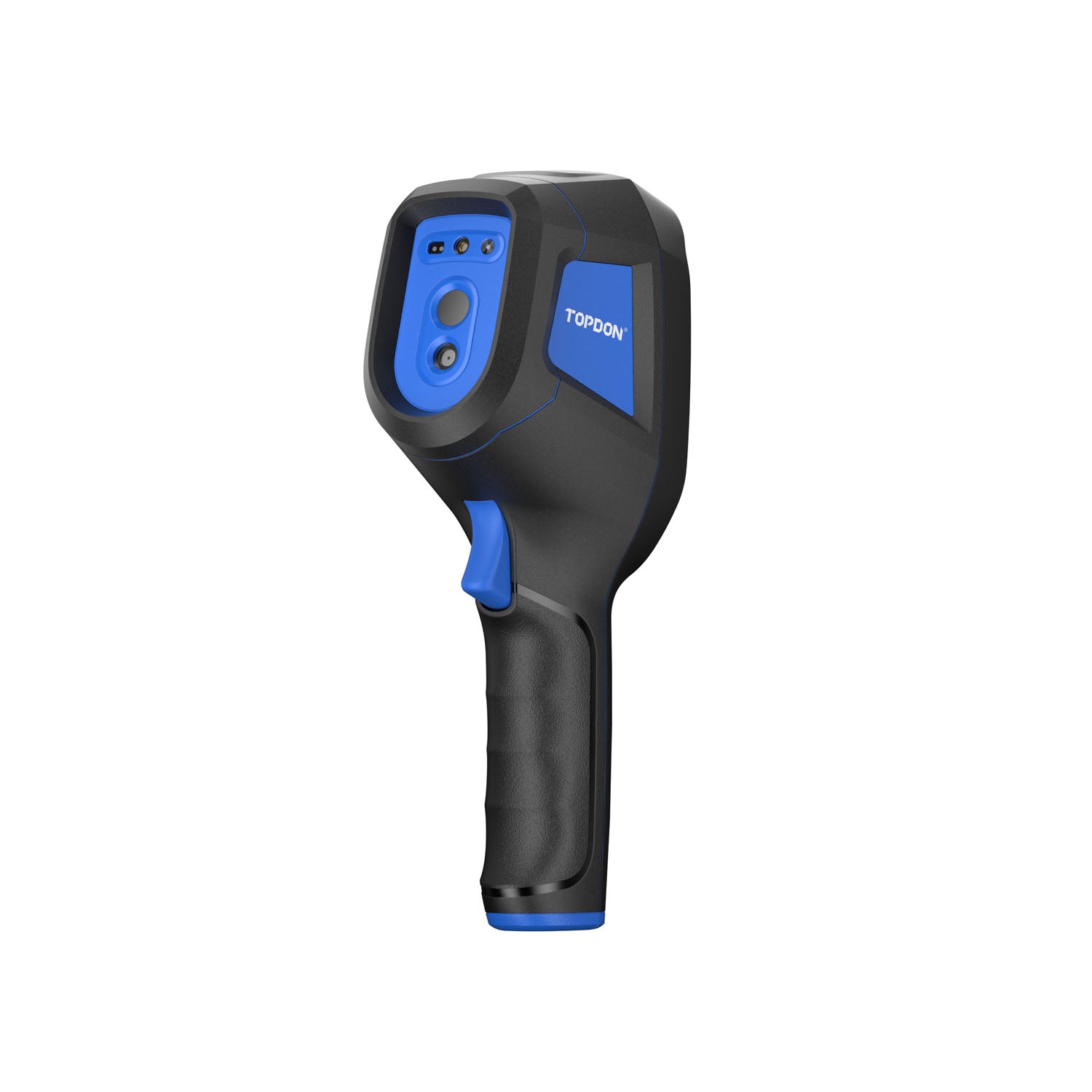
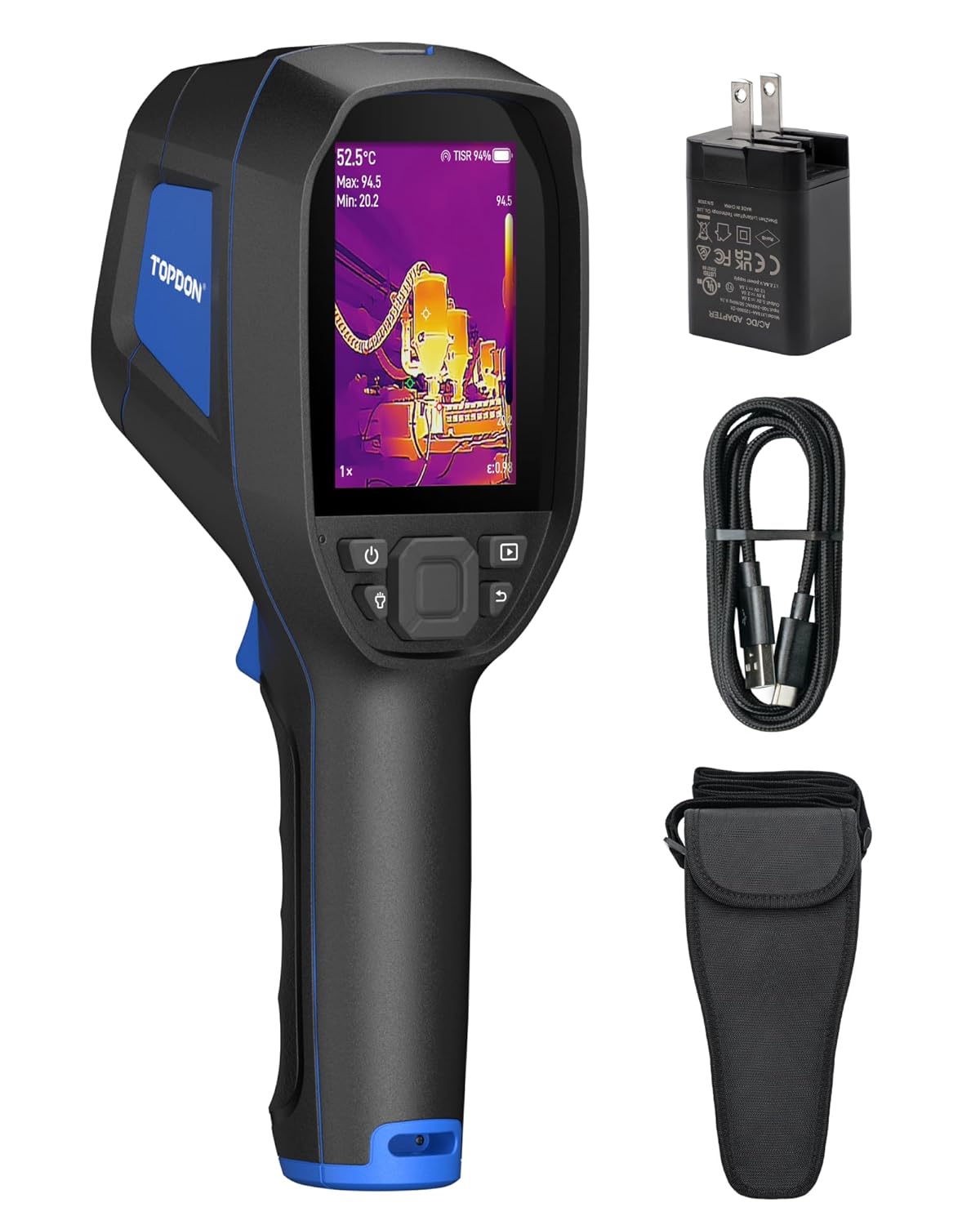
Best midrange standalone valueTOPDON TC004 thermal camera product reference

Handheld · TOPDON

TOPDON TC004

Our take: The regular TC004 is a meaningful step up from the Mini: its 256×192 detector, laser pointer, 64 GB storage and wireless reporting make it better suited to repeated property and maintenance work.

Native IR
256×192 native / 512×384 TISR enhanced
Refresh
25 Hz
Best for
HVAC, electrical and building inspections
Read full review

Review basis: manufacturer documentation, model-specific listing details and a specification-led comparison with the other cameras in this catalogue.

What stands out

The TOPDON TC004 combines 256×192 native / 512×384 tisr enhanced with a 25 Hz refresh rate and <40 mK thermal sensitivity. That combination is most useful for hvac, electrical and building inspections.

What it is like to use

For repeated inspection work, the stronger case is the complete workflow: reliable handling, saved images and a clearer route to documentation. A professional buyer should still weigh reporting software, battery life and focus against detector resolution.

Where it fits best

Its stated measuring range is -4°F to 1022°F, while the format is handheld. The regular TC004 is a meaningful step up from the Mini: its 256×192 detector, laser pointer, 64 GB storage and wireless reporting make it better suited to repeated property and maintenance work.

Drawbacks to consider

The advertised 512×384 figure is TISR-enhanced output, not the native detector resolution, and the larger pistol-grip body is less convenient than a pocket camera.

Our verdict

I would consider the TOPDON TC004 for hvac, electrical and building inspections when repeatable field use and documentation justify moving beyond a basic phone module.

Who should skip it: Anyone whose priority is contradicted by the limitation below, or whose device, reporting workflow or working distance is not explicitly supported.

View full specifications
Detector / output
256×192 native / 512×384 TISR enhanced
Refresh rate
25 Hz
Temperature range
-4°F to 1022°F
Thermal sensitivity
<40 mK
Accuracy
±3.6°F (±2°C) or ±2% under stated conditions
Field of view
56° × 42°
Focus
Fixed focus with red laser pointer
Dimensions
9.5 × 3.8 × 2.9 in (approximate handheld body)
Weight
2.11 lb listed shipping weight; handheld camera is lighter
Power / battery
Rechargeable battery; up to about 8 hours
Storage / connection
64 GB internal storage; Wi-Fi, USB and PC analysis
Durability
IP54; 2 m drop rating
Compatibility
Standalone; Wi-Fi app and Windows analysis

What I’d watch for: The advertised 512×384 figure is TISR-enhanced output, not the native detector resolution, and the larger pistol-grip body is less convenient than a pocket camera.

Electronics & electrician-focused picks

Close-focus and compact tools for circuit boards, panels and component troubleshooting.

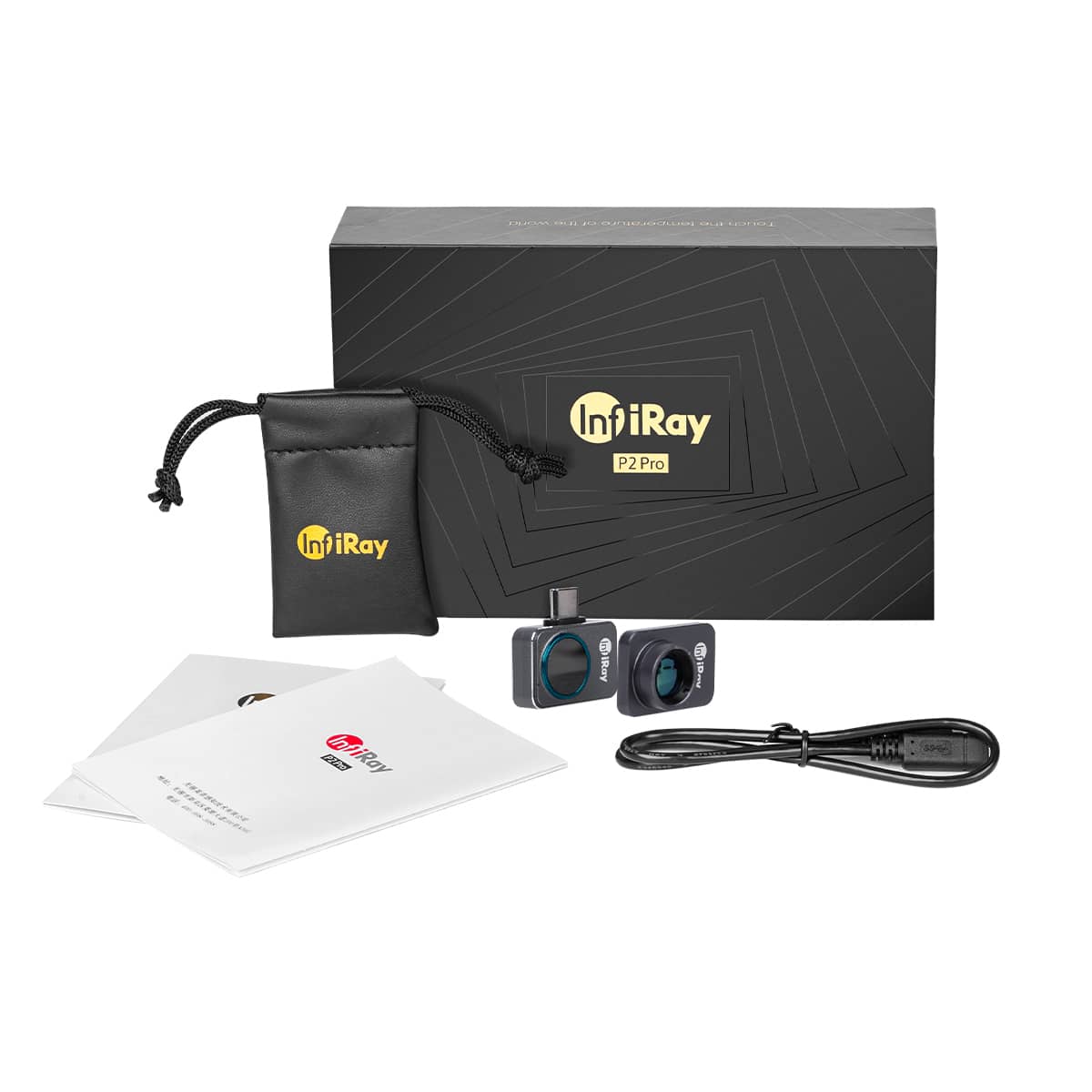
Best PCB close-upInfiRay P2 Pro thermal camera product reference

Phone module · INFRARAY

InfiRay P2 Pro

Our take: Tiny high-temperature hardware that becomes particularly useful for electronics with the correct macro accessory.

Native IR
256×192 native
Refresh
25 Hz
Best for
PCB and compact work
Read full review

Review basis: manufacturer documentation, model-specific listing details and a specification-led comparison with the other cameras in this catalogue.

What stands out

The InfiRay P2 Pro combines 256×192 native with a 25 Hz refresh rate and <40 mK thermal sensitivity. That combination is most useful for pcb and compact work.

What it is like to use

For circuit boards and compact electrical targets, working distance and focus are crucial. A sharp close-up of the component is more useful than a larger blurred image, so this model should be judged on the complete optical setup rather than resolution alone.

Where it fits best

Its stated measuring range is -4°F to 1112°F, while the format is phone module. Tiny high-temperature hardware that becomes particularly useful for electronics with the correct macro accessory.

Drawbacks to consider

Compatibility and included accessories vary by listing; verify the exact variant.

Our verdict

The InfiRay P2 Pro makes the most sense for pcb and compact work, where close detail and a controlled setup matter more than broad room scans.

Who should skip it: Anyone whose priority is contradicted by the limitation below, or whose device, reporting workflow or working distance is not explicitly supported.

View full specifications
Detector / output
256×192 native
Refresh rate
25 Hz
Temperature range
-4°F to 1112°F
Thermal sensitivity
<40 mK
Accuracy
±3.6°F (±2°C) under stated conditions
Field of view
56° × 42°
Focus
Fixed; magnetic macro lens to about 1.6 in
Dimensions
1.06 × 0.71 × 0.39 in (27 × 18 × 9.8 mm)
Weight
0.32 oz (9 g)
Power / battery
About 0.33 W from phone
Storage / connection
Saved to phone through app
Durability
Metal housing; no published IP rating
Compatibility
Connector-specific versions

What I’d watch for: Compatibility and included accessories vary by listing; verify the exact variant.

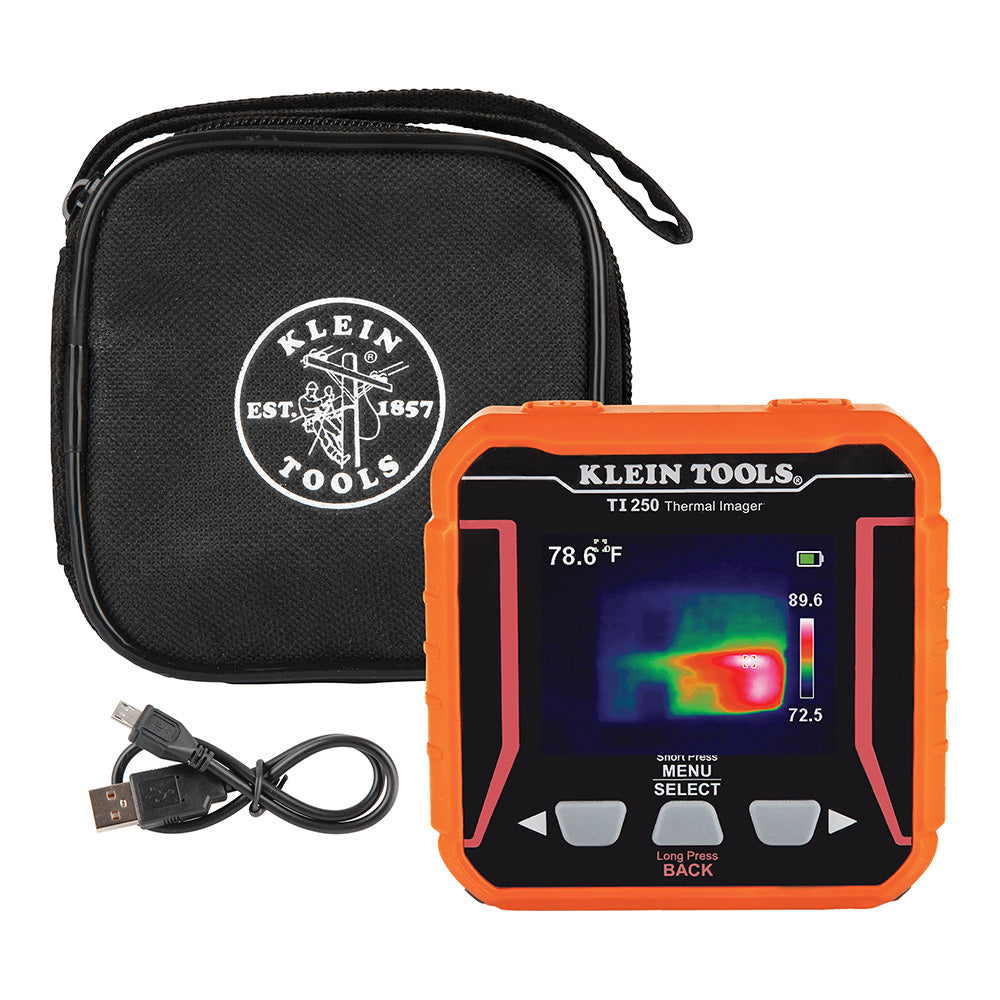
Best electrician-friendly compactKlein Tools TI250 thermal camera product reference

Compact handheld · KLEIN TOOLS

Klein Tools TI250

Our take: A compact trade-focused imager with adjustable emissivity, alarms and optional microSD capture.

Native IR
160×120 native
Refresh
9 Hz
Best for
Electrical and HVAC troubleshooting
Read full review

Review basis: manufacturer documentation, model-specific listing details and a specification-led comparison with the other cameras in this catalogue.

What stands out

The Klein Tools TI250 combines 160×120 native with a 9 Hz refresh rate and Not published thermal sensitivity. That combination is most useful for electrical and hvac troubleshooting.

What it is like to use

For circuit boards and compact electrical targets, working distance and focus are crucial. A sharp close-up of the component is more useful than a larger blurred image, so this model should be judged on the complete optical setup rather than resolution alone.

Where it fits best

Its stated measuring range is -4°F to 752°F, while the format is compact handheld. A compact trade-focused imager with adjustable emissivity, alarms and optional microSD capture.

Drawbacks to consider

Lower refresh rate and less reporting depth than larger professional cameras.

Our verdict

The Klein Tools TI250 makes the most sense for electrical and hvac troubleshooting, where close detail and a controlled setup matter more than broad room scans.

Who should skip it: Anyone whose priority is contradicted by the limitation below, or whose device, reporting workflow or working distance is not explicitly supported.

View full specifications
Detector / output
160×120 native
Refresh rate
9 Hz
Temperature range
-4°F to 752°F
Thermal sensitivity
Not published
Accuracy
±3.6°F (±2°C) or ±2%
Field of view
50° × 50°
Focus
Fixed focus
Dimensions
3.1 × 3.1 × 1.0 in (80 × 80 × 25 mm)
Weight
8.5 oz (241 g)
Power / battery
Rechargeable Li-ion battery
Storage / connection
USB-C and internal capture; model revision dependent
Durability
Trade-focused housing; 6.6 ft drop rating
Compatibility
Standalone + microSD

What I’d watch for: Lower refresh rate and less reporting depth than larger professional cameras.

Best tiny macro kitThermal Master P2 Pro thermal camera product reference

Phone module · THERMAL MASTER

Thermal Master P2 Pro

Our take: The included magnetic macro lens is the reason to choose this version: it lets the small detector resolve board-level heat patterns that ordinary fixed-focus cameras blur together.

Native IR
256×192 native / 512×384 enhanced
Refresh
25 Hz
Best for
PCB hot spots and close component work
Read full review

Review basis: manufacturer documentation, model-specific listing details and a specification-led comparison with the other cameras in this catalogue.

What stands out

The Thermal Master P2 Pro combines 256×192 native / 512×384 enhanced with a 25 Hz refresh rate and <40 mK thermal sensitivity. That combination is most useful for pcb hot spots and close component work.

What it is like to use

For circuit boards and compact electrical targets, working distance and focus are crucial. A sharp close-up of the component is more useful than a larger blurred image, so this model should be judged on the complete optical setup rather than resolution alone.

Where it fits best

Its stated measuring range is -4°F to 1112°F, while the format is phone module. The included magnetic macro lens is the reason to choose this version: it lets the small detector resolve board-level heat patterns that ordinary fixed-focus cameras blur together.

Drawbacks to consider

Macro work has a short working distance and shallow focus; the lens is useful, but it takes a steady hand and a safe test setup.

Our verdict

The Thermal Master P2 Pro makes the most sense for pcb hot spots and close component work, where close detail and a controlled setup matter more than broad room scans.

Who should skip it: Anyone whose priority is contradicted by the limitation below, or whose device, reporting workflow or working distance is not explicitly supported.

View full specifications
Detector / output
256×192 native / 512×384 enhanced
Refresh rate
25 Hz
Temperature range
-4°F to 1112°F
Thermal sensitivity
<40 mK
Accuracy
±3.6°F (±2°C) stated
Field of view
56° × 42°
Focus
Fixed plus magnetic macro lens
Dimensions
1.06 × 0.71 × 0.39 in (27 × 18 × 9.8 mm)
Weight
0.32 oz (9 g)
Power / battery
About 0.33 W from phone
Storage / connection
Saved to phone through app
Durability
Metal module; carry case
Compatibility
Android USB-C

What I’d watch for: Macro work has a short working distance and shallow focus; the lens is useful, but it takes a steady hand and a safe test setup.

Best manual-focus phone cameraThermal Master P3 thermal camera product reference

Phone module · THERMAL MASTER

Thermal Master P3

Our take: Manual focus makes the P3 more flexible than most phone modules: you can tune it for close electronics work, then refocus for a broader mechanical or building scan.

Native IR
256×192 native / 512×384 enhanced
Refresh
25 Hz
Best for
Electronics, macro work and mixed distances
Read full review

Review basis: manufacturer documentation, model-specific listing details and a specification-led comparison with the other cameras in this catalogue.

What stands out

The Thermal Master P3 combines 256×192 native / 512×384 enhanced with a 25 Hz refresh rate and <35 mK thermal sensitivity. That combination is most useful for electronics, macro work and mixed distances.

What it is like to use

For circuit boards and compact electrical targets, working distance and focus are crucial. A sharp close-up of the component is more useful than a larger blurred image, so this model should be judged on the complete optical setup rather than resolution alone.

Where it fits best

Its stated measuring range is -4°F to 1112°F, while the format is phone module. Manual focus makes the P3 more flexible than most phone modules: you can tune it for close electronics work, then refocus for a broader mechanical or building scan.

Drawbacks to consider

Buy the correct connector kit and expect to focus deliberately; it is not as grab-and-go as a fixed-focus model.

Our verdict

The Thermal Master P3 makes the most sense for electronics, macro work and mixed distances, where close detail and a controlled setup matter more than broad room scans.

Who should skip it: Anyone whose priority is contradicted by the limitation below, or whose device, reporting workflow or working distance is not explicitly supported.

View full specifications
Detector / output
256×192 native / 512×384 enhanced
Refresh rate
25 Hz
Temperature range
-4°F to 1112°F
Thermal sensitivity
<35 mK
Accuracy
±3.6°F (±2°C) stated
Field of view
56° × 42°
Focus
Manual focus with macro capability
Dimensions
Compact USB-C module; manufacturer dimensions vary by kit
Weight
About 1 oz with adapters
Power / battery
Draws power from phone
Storage / connection
Saved to iOS/Android through app
Durability
Carry case included on listed kit
Compatibility
Model-specific iOS or Android kits

What I’d watch for: Buy the correct connector kit and expect to focus deliberately; it is not as grab-and-go as a fixed-focus model.

Side-by-side

Compare the cameras you picked

Select 2–4 models directly from the cards. No second set of dropdowns.

0/4 selected

Add 2 more cameras to build the comparison.

Practical field guides

Learn what the heat map really means

01

Home diagnostics

Thermal camera for home inspection

A room-by-room method for windows, doors, insulation gaps and HVAC registers.

Read field guide →
02

Water & moisture

Can a thermal camera find a water leak?

What surface patterns can show—and why thermal does not detect moisture directly.

Read field guide →
03

Buying basics

Thermal camera resolution explained

Why native detector pixels matter more than marketing-sized output.

Read field guide →
04

Electrical

Thermal camera for electrical inspection

A safe workflow for spotting abnormal heat patterns without treating a camera as an electrician.

Read field guide →
05

Comparisons

Phone thermal camera vs handheld

Compare battery, reporting, ergonomics, durability and connector risk.

Read field guide →
06

Technique

Thermal camera emissivity guide

Why shiny metal lies to infrared cameras and how reference tape helps.

Read field guide →
07

HVAC

Thermal camera for HVAC troubleshooting

Check supply temperatures, airflow patterns, coils and duct leakage efficiently.

Read field guide →
08

Electronics

Thermal camera for PCB troubleshooting

Focus, macro distance and safe power-up techniques for finding hot components.

Read field guide →
09

Phone cameras

Best thermal camera for Android

What USB-C compatibility, resolution and app support actually matter.

Read field guide →
10

Thermal basics

Can thermal cameras see through walls?

A plain-English guide to surface temperature, hidden defects and common myths.

Read field guide →
11

Energy audits

Thermal camera for insulation inspection

When weather, indoor-outdoor temperature difference and wind affect your results.

Read field guide →
12

Automotive

Thermal camera for automotive diagnostics

Use heat patterns to inspect brakes, bearings, cooling and electrical loads.

Read field guide →
13

Comparisons

IR thermometer vs thermal camera

Understand when a single spot reading is enough and when a heat map is more useful.

Read field guide →
14

Home diagnostics

Thermal camera for underfloor heating

Map loop warm-up patterns while accounting for floor coverings and slab equalization.

Read field guide →
15

Solar

Thermal camera for solar panel inspection

Screen for unusual module and connection heating under safe, useful operating conditions.

Read field guide →
16

Property inspection

Can a thermal camera find pests?

Learn what animal or nest heat may show—and why the image cannot identify an infestation.

Read field guide →
17

Building inspection

Thermal camera for roof inspection

Use heat-retention patterns to prioritize moisture and insulation investigation safely.

Read field guide →

How we choose cameras

Useful specifications, matched to real jobs.

6ranking factors

Thermal cameras span DIY, HVAC, automotive, property and electronics work. We compare the details that actually change the result: detector resolution, focus, sensitivity, field of view, software and connector compatibility.

Our approach: separate native from enhanced resolution, map cameras to real tasks, verify connector compatibility and explain what a thermal pattern can—and cannot—prove.

Ranking factors: native detector resolution, thermal sensitivity, focus and working distance, refresh rate, workflow reliability, and value for the stated use. A badge is a use-case recommendation—not a claim that one camera is best for everyone.

Read the research methodology →